Improving Mobility and Connectivity Across Rural Virginia
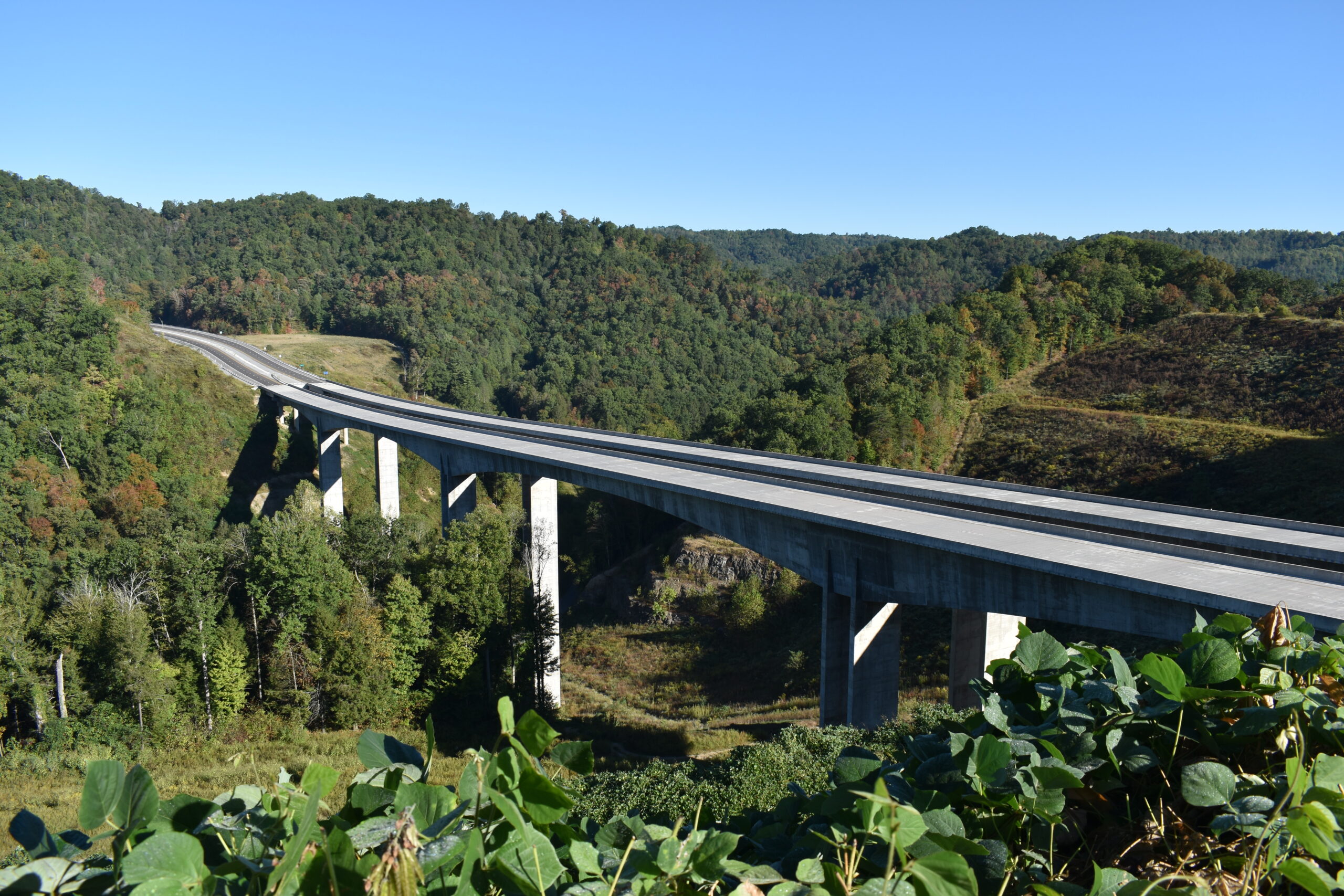
Virginia’s Corridor Q Route 460/121, also known as Corridor Q, marks the beginning of a new era for Buchanan County’s transportation.
Corridor Q consists of Poplar Creek Phases A and B. Poplar Creek Phase A is a 2.61-mile-long, four-lane highway, providing a modern, safe transit system and improving interstate commerce. Its completion improved access and connection to the state of Kentucky and within Buchanan and Dickenson counties.
The project is part of a much larger effort to connect rural Appalachian towns to the interstate system. U.S. Route 460 is part of the Congress-designed Appalachian Development Highway System, with an ultimate goal to increase economic development and mobility for these isolated areas.
Diving into Design
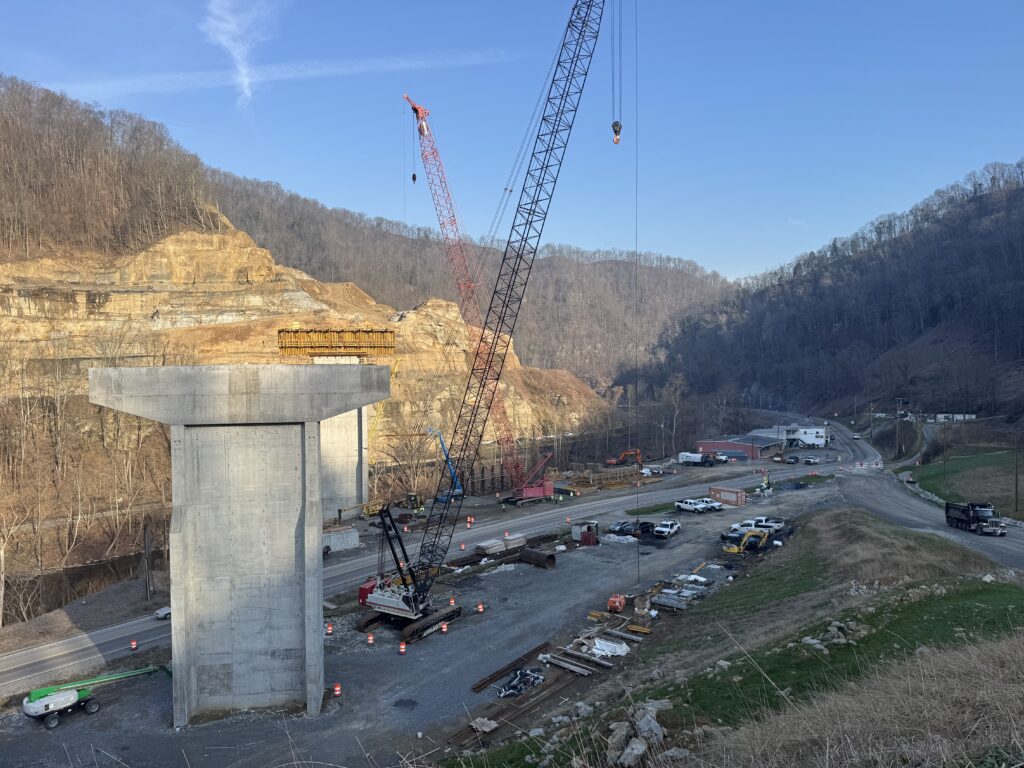
Virginia Department of Transportation (VDOT) and Bizzack Construction, LLC, immediately got to work designing and obtaining permits for the Poplar Creek Phase A when the contract was awarded in July 2015. Four years later, construction began in August, with the project reaching full completion in October 2025.
Poplar Creek Phase A’s construction consisted of five major cut-and-fill elements, with cut sections exceeding 200 feet in height and hollow fills over 300 feet deep. Through the Public-Private Transportation Act contract, the project used mining synergy, providing unique construction opportunities to extract, produce and place on-site aggregate.
Incorporating a branch pipe and an intersection lifted the roadway from the creek’s level to the level of Route 460/121.
The project included 14 erosion and sediment control phases, three permanent stormwater basins and more than 14 miles of silt fence surrounding the area. Throughout the construction, eight temporary sediment basins and 40 temporary sediment traps were installed, in accordance with the multiple permits pertaining to the wetland and stream impacts that Bizzack Construction, LLC, and VDOT obtained.
“As an engineer, a project such as Poplar Creek Phase A is considered one of the most unique and challenging projects of a career,” said Tabitha Crowder, P.E., VDOT Bristol District Engineer. “A great team was assembled within VDOT and private industry to move this complex project from design to fruition.”
A Complex Culvert
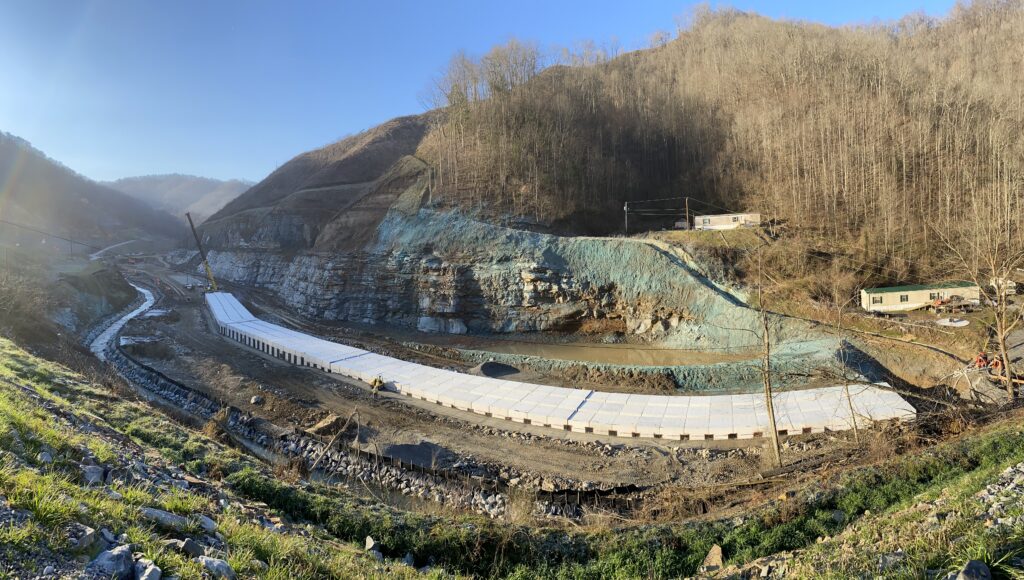
The most unique aspect of Poplar Creek Phase A’s construction was a long, deeply buried, triple-cell, precast box concrete culvert. Permeatile Concrete Products Company designed the precast culvert with 13,330 cubic yards of 10,000 pounds per square inch concrete and 3,360,000 pounds of ASTM A1035 CS corrosion-resistant steel.
Each cell wall has dimensions of 7 by 7 feet, with the walls’ thickness varying from ten to 20 inches and floor slabs varying from 12 to 28 inches. Each box culvert is 2,250 feet in length, accentuated with five turns to approximate the course of the original creek. One of the turns is as sharp as 30 degrees.
The culvert’s depth fill varies from five to 310 feet, while the height of the embankment is even greater at approximately 340 feet.
The culvert’s design ultimately eliminated the need for a complicated bridge structure. The culvert’s installation also reduced the right-of-way footprint by removing multiple disposal areas due to the amount of required evacuation, resulting in a smaller disposal footprint.
To put the scale of the project into perspective, the iconic 305-foot Statue of Liberty could be buried within the box culvert when filled to its peak.
“The burying of a box culvert in such a deep fill may not visually compete with the engineering achievements of a long-span bridge or skyscraper, but for a small group of transportation engineers, the successful installation of the Poplar Creek Phase A Box Culvert represents an innovative alternative to a challenging engineering problem,” said Marty Halloway, P.E., VDOT Bristol District Assistant Engineer for Project Development.
The innovative design paid off; the project was selected for the Virginia Chapter of the American Concrete Institute 2025 Excellence in Construction.
Poplar Creek Phase A also received the 2026 Fourth Annual VDOT Environmental Performance Program (EPP) Award. The EPP Award, which was developed in a joint effort between VDOT’s Environmental, Location & Design and Construction Divisions, recognizes projects with extraordinary environmental performance completed within the previous year.
Looking to the Future
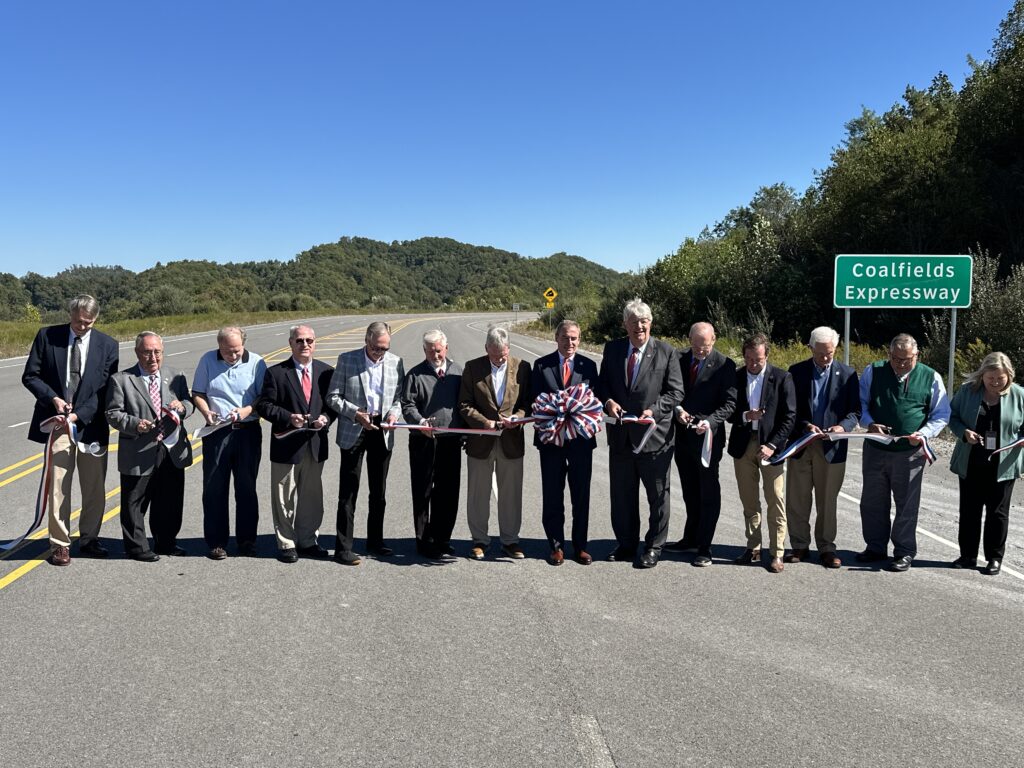
At completion, Poplar Creek Phase A cost an estimated $199 million and is the first part of the two-phase Corridor Q project. Poplar Creek Phase B will be a four-lane, two-mile highway, anticipated to be completed in late 2027.
Phase B will consist of moving approximately 16 million cubic yards of earth materials, installing a new drainage system and constructing a 1,100-foot steel girder bridge spanning the Levisa Fork River and the Norfolk Southern Railway. The latter is at a steep incline due to a 550-foot elevation for over a mile and a half of the section. At completion, the Phase B bridge will be the third-tallest in Virginia.
“The team is very proud of the collaborative effort made by multiple contractors, design professionals and state and federal agencies that were needed to make this project a reality,” said VDOT Bristol Communications Manager Michelle Earl. “The team considered potential roadblocks to be engineering challenges to overcome, pulling together in a group effort to deliver the project.”
Photos courtesy of VDOT.
By Taylor Moore. She is the Assistant Editor at American Infrastructure and can be reached at taylor@builder.media.
This is featured in the July/August issue of American Infrastructure. Read the print version here.