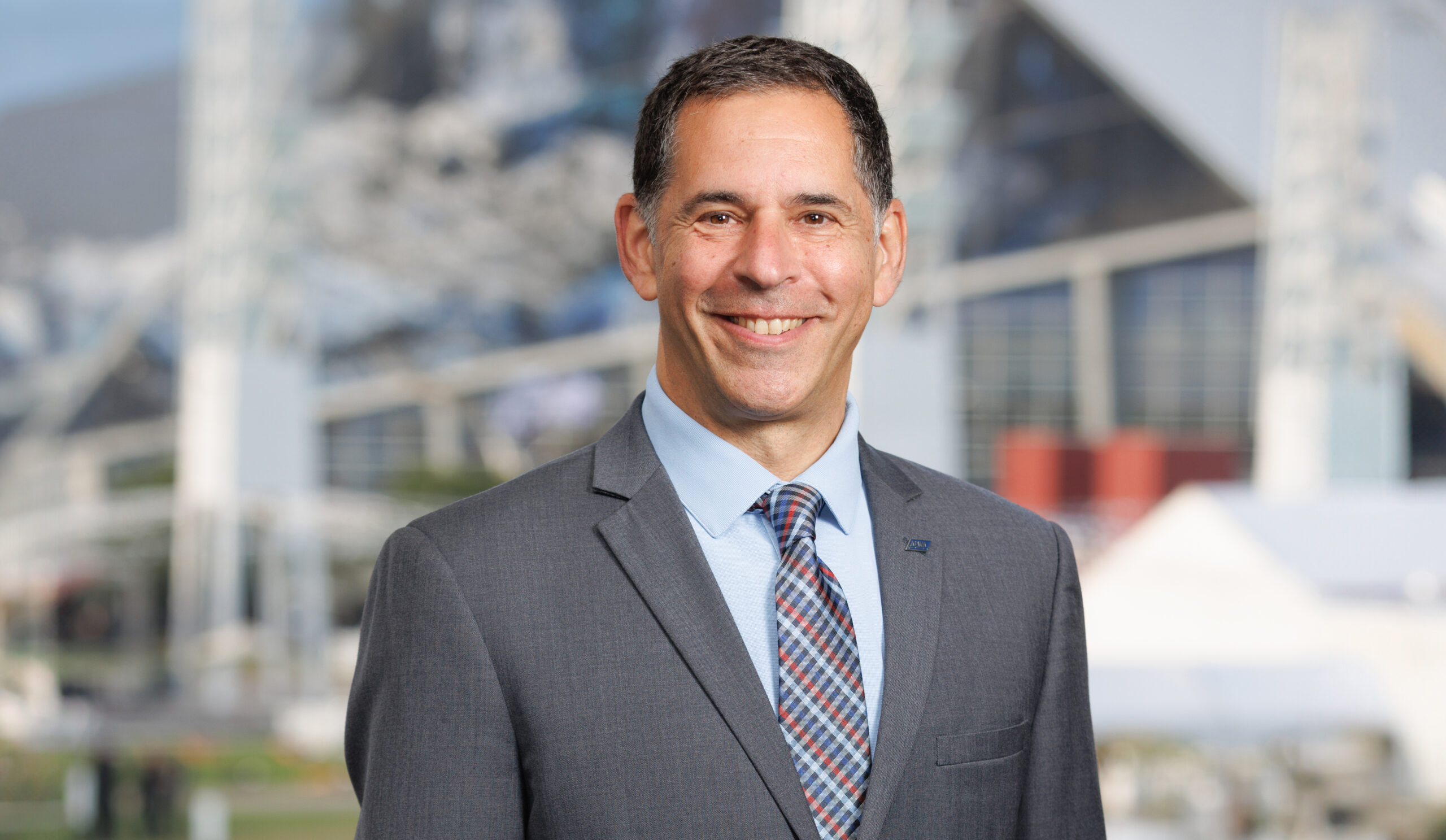
AI Interview: Scott D. Grayson, CAE, APWA CEO
In the July issue of American Infrastructure, Grayson discusses APWA’s strategy for smarter cities and stronger workforces
 American Infrastructure: As we hit the midway point in the year, what have been some of the standout highlights or proudest achievements for APWA so far in 2026?
Scott D. Grayson, CAE: 2026 is proving to be an exciting year for APWA. People are noticing the innovative ways we’re serving public works professionals.
First, we’re proud to have been recognized with a number of prestigious awards this year, including being named one of the 2026 “Best Nonprofits to Work For” by The NonProfit Times. We’ve received seven awards, including three Telly Awards, for APWA’s videos that support public visibility for public works, an award of excellence for the APWA Reporter and three awards recognizing both PWX and the North American Snow Conference for fastest-growing total attendance and net square feet of exhibit space.
APWA is in a position to tell our members’ stories, which are so important to policymakers. It’s not always easy to explain what public works is if everything is working the way it should. We are focused on getting positive stories out there.
Two other new programs we’re especially proud of are the launches of our new CareerZone, which I will talk about later in this interview and our podcast, Public Works Radio (PWR). We’re thrilled to bring this podcast to the marketplace because it offers us the perfect opportunity to shine a spotlight on the people and projects that keep our cities running—humanizing the work and the professionals who make it happen. Highlight topics from our first half of season one include managing the disposal hazards of lithium-ion batteries and the use of “goatscaping,” a practice where agencies hire goats to eat invasive plant species in difficult spots that would be a safety concern for humans.
Our members have endless, fascinating stories to share, so I encourage American Infrastructure readers to be on the lookout for the launch of the second half of season one in mid-August.
AI: Technology is rapidly shifting the baseline for smart cities and asset management. How are APWA’s new 2026 education models, specifically microcredentials and the updated career hub, helping municipalities stay efficient and updated?
SG: APWA’s new microcredentials and CareerZone provide municipalities with targeted training and a centralized hub for career development, recruitment and career planning, both built to keep pace with rapidly changing smart cities and asset management.
APWA microcredentials will focus on specific skills, like asset management and sometimes specific technologies, so new public works professionals and seasoned staff can upskill quickly as tools evolve. The short modular formats of microcredentials fit into busy schedules, supporting efficient, just-in-time training without having to pull staff off the job.
CareerZone is a new and interactive online career hub that provides employment opportunities for our members and strengthens workforce development by supporting individuals and municipalities navigating public works careers. CareerZone features skill-based career pathways to show individuals how to progress from entry-level roles to advanced positions within public works. This technology will also provide individuals with clear links to required microcredentials and certifications. CareerZone can help leaders in municipalities identify skill gaps and keep them informed of the latest standards and expectations in the profession.
Microcredentials will deliver targeted, up-to-date technical skills while CareerZone provides structure, visibility and a workforce strategy. Together, they create a learning ecosystem that keeps public works teams equipped with the latest training tools and resources.
AI: Public works is often described as an ‘invisible’ profession until something goes wrong. How is the APWA supporting its members at the federal and local levels to receive appropriate resources and recognition?
SG: Public works professionals are the people who keep communities functioning. Usually, without drawing attention to themselves. Residents may not think daily about roads, water systems, stormwater infrastructure, fleet operations, emergency response, or solid waste services, but they depend on them every hour of every day. The challenge is not simply visibility; it is ensuring that elected officials, policymakers and the public understand the value of essential public works services and invest accordingly.
APWA supports this effort in several ways.
At the federal level, we advocate for policies and funding that help communities maintain and modernize critical infrastructure, strengthen emergency preparedness, improve transportation and water systems and address workforce challenges. We work directly with Congress, federal agencies and coalition partners to ensure that the public works perspective is represented in national policy discussions. We consistently hold meetings with federal agency officials and members of Congress to advocate for APWA’s policy priorities, our members and the public works industry. We also work closely with our chapters to leverage our grassroots network and messaging to local and state legislators.
It is crucial that lawmakers and regulators hear directly from public works professionals on legislation and regulations to best inform the policies that govern the investment and operations of our critical infrastructure and essential services so foundational to our country’s public health, safety and economic strength.
APWA’s offerings for education, credentialing, accreditation, leadership development and advocacy resources support public works professionals’ ability to demonstrate and grow their value to community leaders and residents. Through initiatives such as National Public Works Week, the Engineering & Public Works Roadshow, the Engineering Workforce Consortium (EWC) and APWA’s ongoing public awareness efforts, we are helping tell the story of how public works improves quality of life for all communities.
The EWC is a first-of-its-kind joint effort, with APWA serving as a lead association alongside the American Council of Engineering Companies (ACEC) and the American Society of Civil Engineers (ASCE). Other associations participating in this effort share the focus of addressing and providing solutions to workforce issues facing the engineering and public works industries. The consortium brings together a diverse collection of voices to attract the next generation of talent. Participation in the EWC gives us all access to a collaborative engine capable of driving workforce innovation at a scale no individual entity could accomplish alone.
One of APWA’s strategic priorities is helping shift public works from being noticed only during emergencies to being understood as a foundational service that makes every other aspect of community life possible. We continue to emphasize the need for our members and all people who work in public works to share great stories about how what they do protects both public health and safety.
AI: Can you tell us about the 2026 PWX Conference and what attendees can expect from the event?
SG: Everything is bigger in Texas and that will certainly be the case for PWX 2026 in Houston this August. We’ve got an incredible program planned that encourages networking and building new relationships to share best practices throughout the show experience.
We know our Texas Chapter Host Committee has some amazing special events planned, many of which are unique to Texas. Highlights include: a National BBQ Showdown, where teams can compete for best BBQ bragging rights, the Get Acquainted Party at Stampede Houston, where attendees can line dance or take a photo with a live steer and a silent auction that will benefit two local non-profit organizations.
We’re also lucky to have so many passionate professionals who serve on APWA committees. Each year, they work closely with our education and credentialing team to curate a best-in-class education program. At PWX 2026, attendees may choose from more than 150 thought-provoking, interactive education sessions, technical learning tours, workshops and certificate programs. Building upon their skills while earning CEUs are key parts of our multimodal education program.
Finally, we’re excited to be hosting our largest exhibit floor ever. Spanning more than 111,000 net square feet, this year’s exhibit floor will allow attendees to converse with an extensive gathering of respected industry vendors, all while exploring distinguished product displays, attending live presentations and taking advantage of numerous other interactive opportunities.
AI: What makes you optimistic about the future of public works?
SG: There are a few things that make me optimistic about the future of public works. The first is the APWA Project of the Year Award honorees. 2026 award winners span transportation, water, environment, structures, historic restoration and emergency repair, showing strength across the full spectrum of public works. In addition, projects range from small rural improvements to mega-projects over $75 million, illustrating unprecedented investment at all levels. Every corner of public infrastructure is advancing simultaneously, which should make us all hopeful for what’s next.
To highlight these amazing awards, we have not only joined forces with ACEC and ASCE to conduct the Engineering & Workforce Roadshow, but we have brought awardees to Washington, D.C., during National Public Works Week to celebrate them with the public and members of the U.S. Congress.
Second, are the people who have made public works their profession. The people have always been what makes public works so special and their dedication and service-minded approach, along with a future-forward focus, incorporating technology, changing community needs and being good stewards of resources, makes me optimistic that public works will continue to be a driving force in ensuring our communities thrive.
We will continue to work closely with our members and chapters leaders from 62 chapters and 100 branches to create programs and services that are timely, relevant and move our organization and public works forward in meaningful ways,
AI: Anything else you’d like to share that we didn’t cover?
SG: One thing I would emphasize is that infrastructure is essential, but it is the professionals behind that infrastructure who protect public health and safety, support economic growth, strengthen resilience and improve quality of life for all. As our communities continue to evolve, APWA will remain focused on elevating the profession, developing the workforce and ensuring that public works has a strong voice in policy decisions that shape our nation’s future.
This interview is featured in the July / August issue of American Infrastructure; read the print version.