Baltimore’s Plan to Revive Metro Transportation
Water made Baltimore what it is today. The city sits at the confluence of four rivers: the Gwynns Falls, the Jones Falls, Herring Run and the Patapsco. These waterways provided abundant hydropower, which allowed for the construction of textile mills, paper mills and flour mills, all of which formed the economic bedrock upon which the burgeoning city was built. The four rivers deposit nutrients into the Chesapeake Bay, which was once the most productive estuary ecosystem on the planet. Massive oyster reef complexes were so large that their tops sat above the water at low tide and the tremendous quantity of oysters filtered the entire volume of water in the Bay every two to three days. These ancient oyster reefs were strong enough that in 1847 the United States War Department built Fort Carroll on top of one in the middle branch of the Patapsco. The fort still stands to this day, a living testament to the resilience and steadfastness of the region’s oyster reefs.
As the westernmost port city on the East Coast, Baltimore was a critical waystation facilitating the transportation of people and goods into and out of the American interior. Its geography helped make Baltimore the third-largest city in the country in its heyday and its abundant food resources fed not only the city’s residents but much of the country’s as well.
Shipping stimulated the local economy and ferries enriched the social lives of Baltimoreans. Traveling by water simply made good sense in a city built on several peninsulas jutting out into the waters of the Patapsco. Ferry Barge (today’s Port Covington) was an enormously popular resort town in which one could find dozens of large ferry boats hosting bars, dance halls, restaurants and gambling parlors. As the ferry boats technically lay a few feet outside the terrestrial boundaries of Baltimore City, they were legally allowed to sell alcohol on Sundays. As one can imagine, this legal loophole made Ferry Barge an enormously popular destination. This is just one example of the absolutely foundational role Baltimore’s waterfront has played in the social and economic life of the city since its founding.
The early 20th century brought many changes to Baltimore and the rise of the automobile led to a steady decline in both ferries and streetcars as primary modes of transportation. The city’s current state of car-dependency is a bit puzzling given its extensive water resources. Harbor Point and Locust Point lie less than half a mile away from one another but traveling between the two by car can take 20 minutes or more. Baltimore City DOT’s Harbor Connector runs a free ferry service along this route, which last year saw 178,000 passenger trips. There are two additional free ferry routes, one running from the Inner Harbor to Federal Hill and the other from Canton Waterfront to Locust Point. Currently, the Harbor Connector only runs on weekdays, but its success has increased calls to offer weekend service and to add additional routes. Ferry transit service, though long ignored, holds untapped potential in Baltimore and other coastal cities.
Baltimore City DOT continues to invest resources in the Harbor Connector, improving sustainability, resiliency and accessibility across the city’s transportation system. Procurement is underway for two hybrid EV ferry boats, which will reduce emissions and increase system capacity. These new boats will employ regenerative charging technology will use energy expended in braking to charge the ships’ batteries, increasing efficiency and reducing reliance on fossil fuels. Upgrades are also underway to construct 6 floating ferry landings to allow riders who use wheelchairs and other assistive devices to board safely. These changes will ensure symmetry between deck height and landing height regardless of tidal changes, resulting in significant improvements in accessibility and passenger safety. The city’s recently released Water Transit Strategic Plan includes potential alignments for new ferry routes as well as a number of Ferry-Oriented Development projects planned for Baltimore’s waterfront. These strategies for improving waterfront development and transportation system performance are already bearing fruit and will continue to do so for years to come.
If Baltimore’s experience with ferry transit demonstrates one thing, it’s that we can and should draw inspiration from our past to address today’s challenges. Sea-level rise will become an increasingly urgent issue requiring dynamic solutions. Our water resources, long underappreciated, come with challenges as well as opportunities. As we consider what the next 250 years hold for our city, one thing is clear: We must look back toward the water.
 This column is featured in our July/August issue of American Infrastructure. Read the print version here.
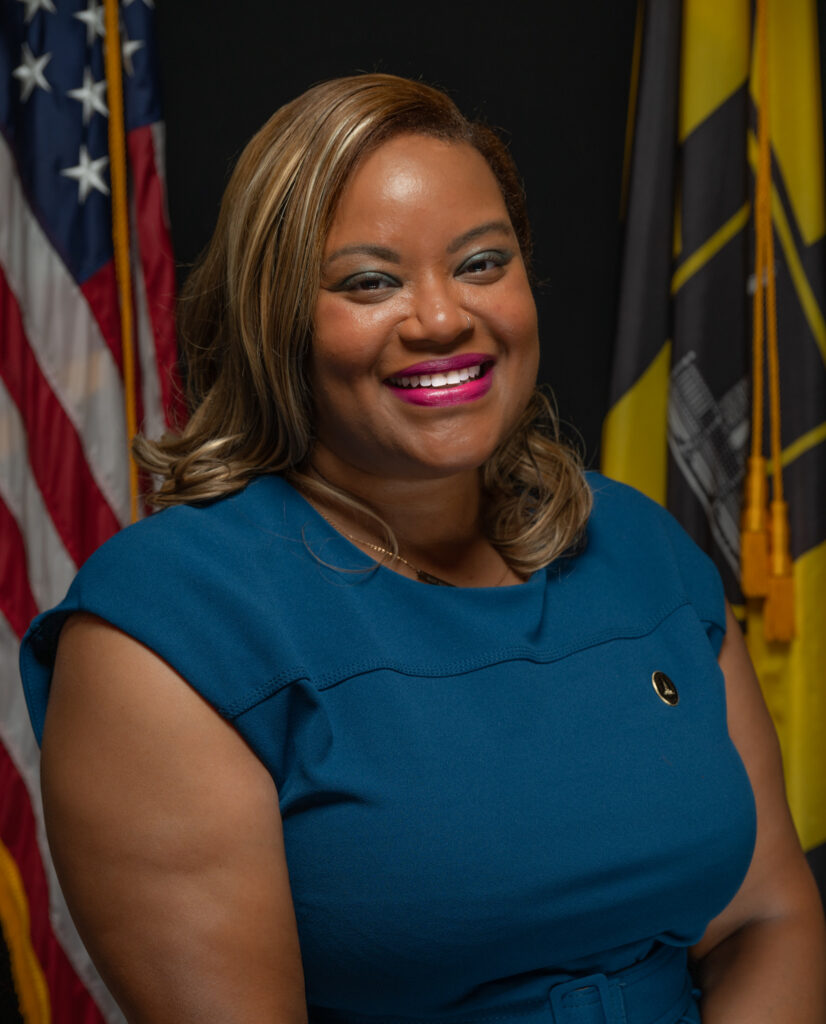
Veronica McBeth, MSL, is the Director of Transportation for the City of Baltimore, Maryland. She can be reached at veronica.mcbeth@baltimorecity.gov.