Inside Arizona’s Most Ambitious Freeway Project
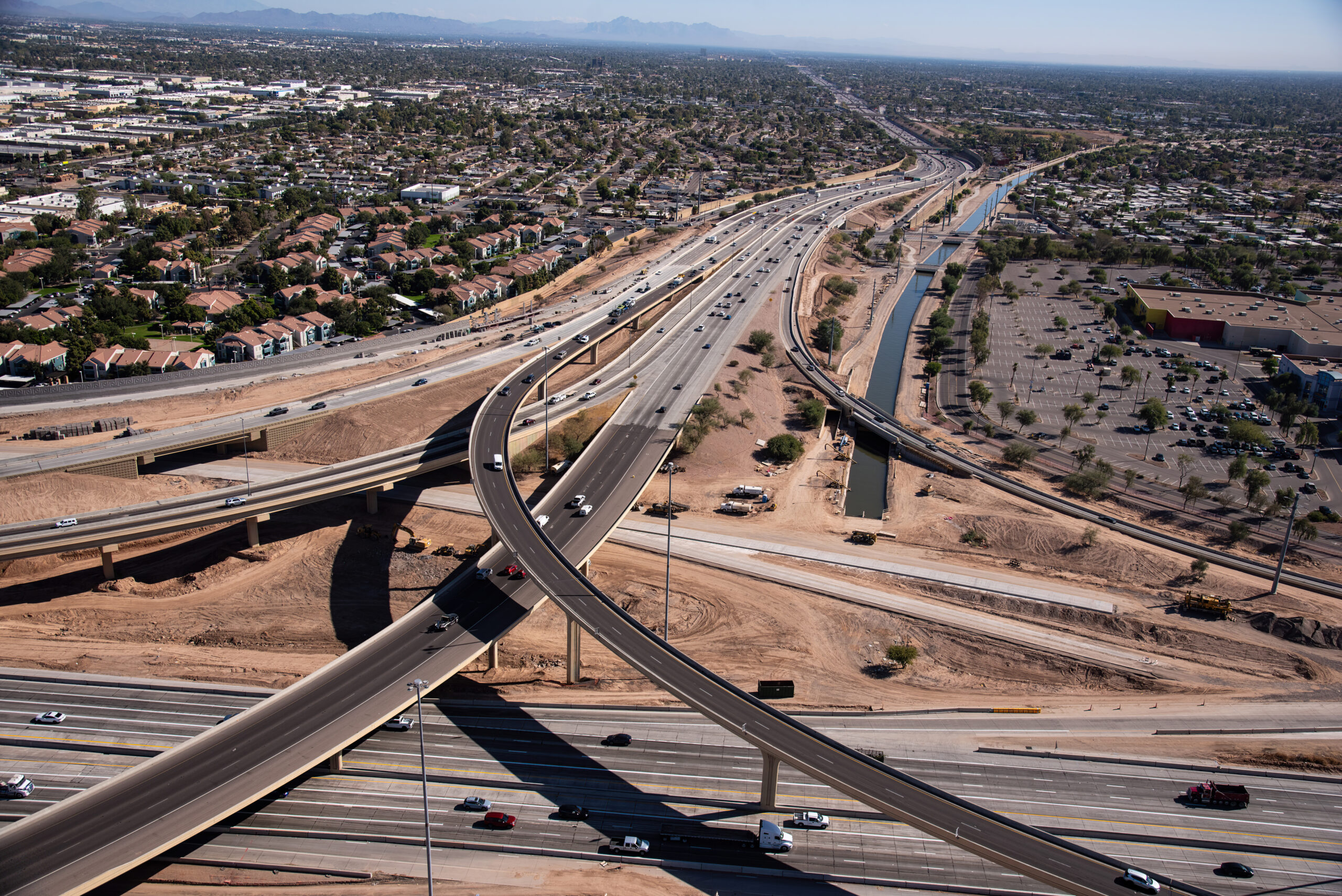
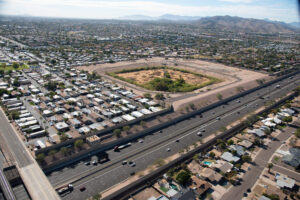
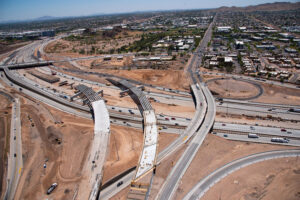
The I-10 Broadway Curve project took place on one of the most traveled stretches of the Arizona highway. On an average weekday, more than 300,000 vehicles passed through this area, leading to years of traffic congestion, long commute times and unpleasant driving experiences. The Arizona Department of Transportation (ADOT), expecting an increase of over 75,000 more vehicles by 2040, decided a major renovation was needed.
An Ambitious Scope
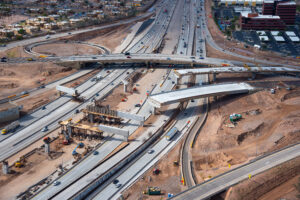
The project initiated first steps in 2019, solidifying the scope of the project to 11 miles of I-10. One major construction component was the widening of the highway to six general purpose lanes and two high-occupancy vehicle lanes in each direction, greatly increasing mobility.
The project also required the rebuilding of the interchange with another highway, SR 143, for improved traffic flow for drivers. ADOT also added collector-distributor roads to separate through-traffic on the highway and local traffic entering or exiting the highway. Rebuilding the I-10 interchange with SR 143 to improve traffic flow and create direct connections to and from SR 143 for drivers in the I-10 HOV lanes.
It also included the replacement of bridges that ran over I-10, the Broadway Road bridge and the 48th Street bridges, as well as the widening of the I-10 bridges over the Salt River. ADOT prioritized increased mobility for pedestrians and cyclists, with the inclusion of two bridges for pedestrians and bicyclists over I-10 and improving the Sun Circle Trail crossing at Guadalupe Road.
The project required close collaboration between ADOT, the project team and the Federal Highway Administration, Maricopa Association of Governments, City of Tempe, City of Chandler, Valley Metro and the town of Guadalupe. ADOT notes that all of the parties worked seamlessly to communicate project updates, status and traffic control to limit the effect of freeway restrictions and closures.
Construction officially began in October of 2021.
Sustainable Solutions
Often during major reconstruction infrastructure projects, tons of waste is generated from the planning process to the removal of previous structures. ADOT started by the I-10 Broadway Curve Project with an initiative to limit or reduce the waste caused. In the beginning of the project, the design team shifted from printing several hundreds of thousands of pages of documents to transferring the process digitally. This subtle shift reduced its immediate impact through paper waste.
During construction of the project, ADOT removed asphalt, millings, concrete metal and steel from previous bridge structures. When possible, the authority reused the materials for drivable roadways or as filling used in other areas of the project. When recycling back into the project was not an option, the project crew transferred the materials to other sites for potential reuse.
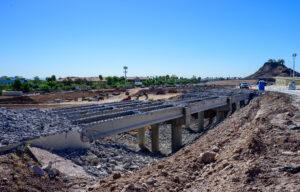
Additionally, one of the new design features used in the project was the lining of the Tempe Drain, off I-10 and 32nd St. Rather than using the common rebar and concrete to line the previous rock lining to concrete, the project used a concrete-fiber mixture placed over metal mesh. This provides a stronger,more durable and resilient lining that increases water capacity and flow into the Salt River and reduces maintenance needs and costs associated.

Positive Public Reaction
The project officially opened all lanes of I-10 on June 5, 2025. The total $832,819,314 cost of the project was funded through federal funds, a dedicated half cent sales tax initiative and local funds.
Despite the project’s impact on the travel for residents, businesses, commuters and freight transportation operations during periodical closures of the I-10 freeway, public reaction to the project was reported to be positive.
“Throughout the construction process, there was extensive news media coverage and thanks to the project team’s pro-active positive messaging and over the top communications with everyone, the negative sentiment for the project was around 2% and that is really impressive, considering how much this project impacted the community during the more than four years of active construction,” said Marcy McMacken, AZDOT Public Information Officer.
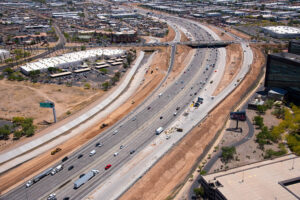
She noted that there is rarely any traffic congestion in the area now and travel times are reduced at all times of the day through the area.
“This project was ADOT’s largest urban freeway reconstruction project to date and due to the traffic congestion and reduced travel times in the I-10 Broadway Curve area and with the region’s population to increase by 25%, this project had to be done,” said McMacken. “Now that the project is complete, the traffic congestion and travel times through the I-10 Broadway Curve area have been significantly reduced and traffic is flowing efficiently, even during weekday high peak travel times.”
Photo Credit: ADOT
By Sofia Feeney. She is the Editor of American Infrastructure and can be reached at sofia@builder.media.
This is featured in the May/June issue of American Infrastructure. Read the print version here.