The Kurt R. Segler Water Reclamation Facility Delivers a Generational Investment
Southeast of Las Vegas sits the city of Henderson, a rapidly growing town. According to the U.S. Census report, the city expanded from 257,729 residents in 2010 to 353,289 in its 2025 estimate.
The Kurt R. Segler Water Reclamation Facility (WRF) is the city’s primary wastewater treatment plant.. First built in 1995 and named after the city’s first utilities service director, the Kurt R. Segler WRF is critical to delivering reliable wastewater service for the entire city.
“The facility is essential to protecting Henderson’s water resources by treating wastewater from homes and businesses and returning it to Lake Mead, allowing every drop to be cleaned and reused,” said Priscilla Howell, Director of Utility Services for the City of Henderson.
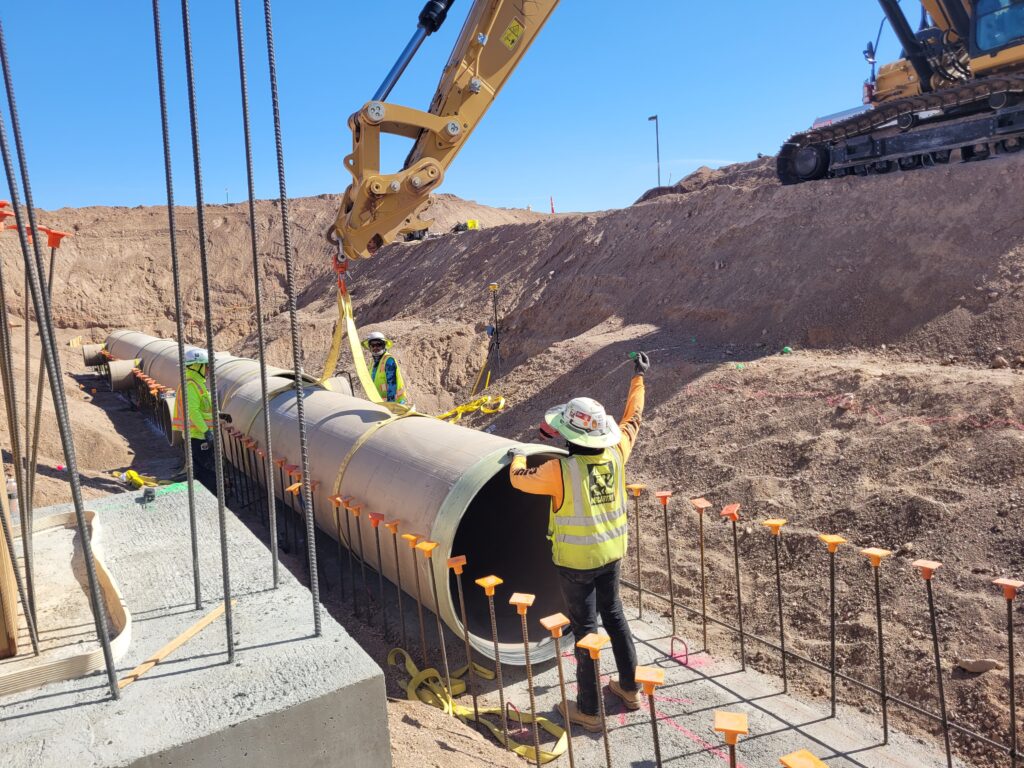
Expanding Capabilities
The Kurt R. Segler Water WRF last received an upgrade in 2008, but with a growing population and investment in the city’s future, productivity was essential.
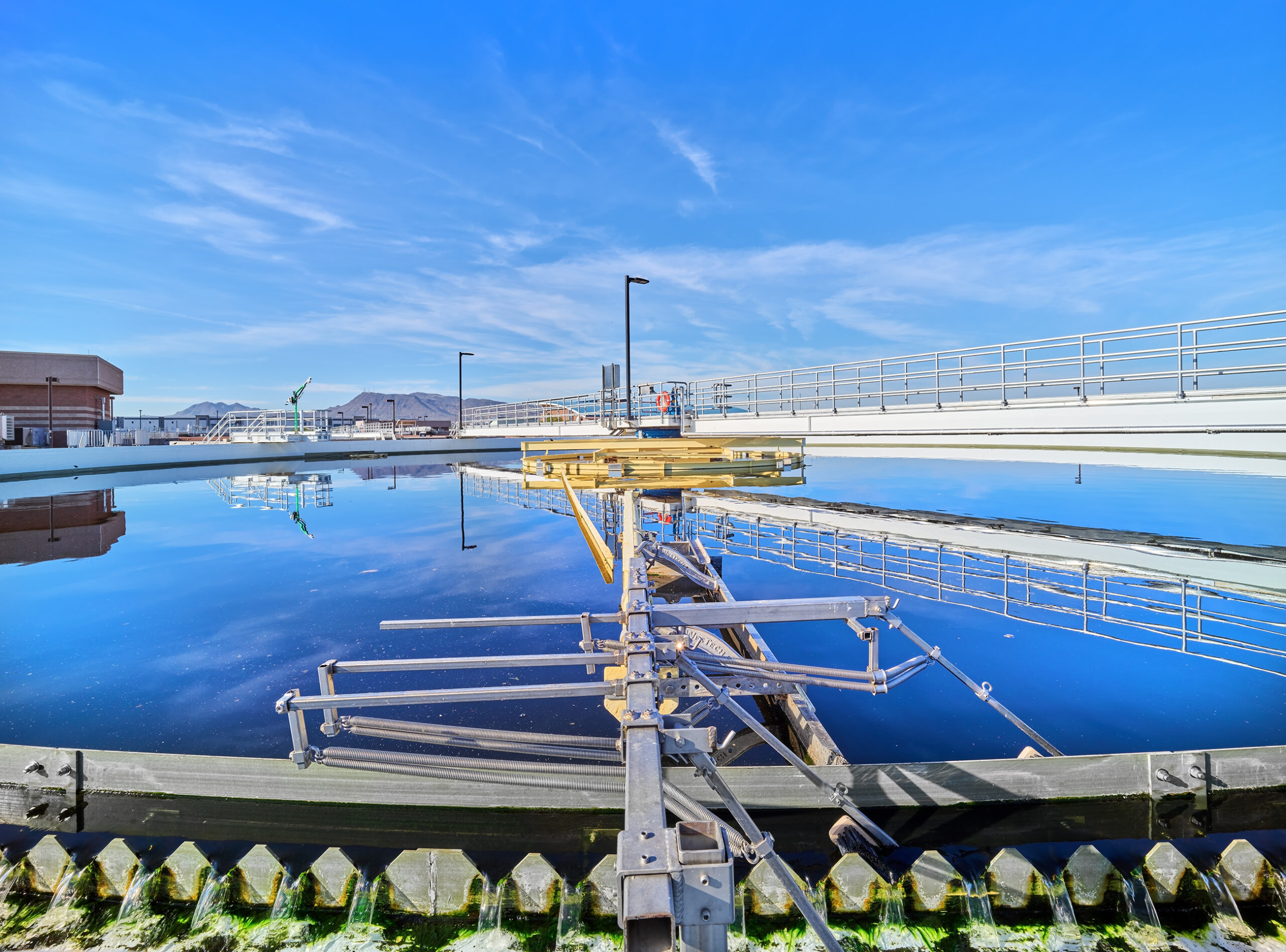
The $100 million expansion modernized the facility’s biological nutrient removal process, increased reliability and expanded capacity to meet growing wastewater demands.
Key upgrades included a new 12-million-gallon Biological Nutrient Removal basin, a secondary clarifier and new sand filters. Improvements to the facility included replacing components, such as grit pipes, alum pumps, influent pump stations, vacuum systems and the backwash pump station.
“Together, these improvements help ensure efficient, reliable operations and support the community’s long-term sustainability goals,” said Howell.
Howell noted that, throughout the expansion, the team was committed to environmental stewardship and energy-efficient construction.
The tower cranes used during construction received power from the hydropower resources of the Colorado River Commission. This reduced reliance on non-renewable sources and lowered carbon construction-related emissions.
The team also prioritized the use of energy-efficient equipment during construction to improve capacity. Including its modern treatment technologies, advanced process controls and enhanced biological nutrient removal processes.
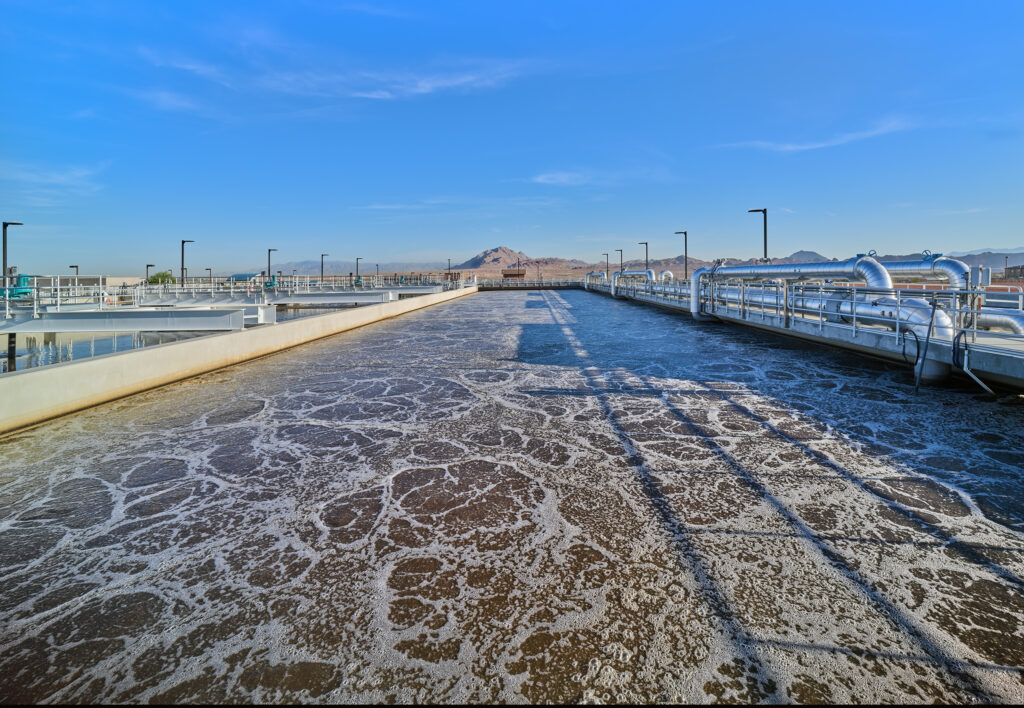
Ensuring Nonstop Service
Unlike roads or bridges, many water infrastructure projects do not have the option to close for repairs. Responsibility for keeping services running during repairs rests with the project team.
“The biggest challenge was constructing and commissioning a major treatment facility expansion while keeping the active wastewater treatment plant fully operational and permit-compliant,” said Howell.
Because of this common obstacle, the Henderson’s utility staff created hundreds of Maintenance of Plant Operations, a coordinated and detailed plan of risk assessments and contingency plans for continued service. This required all hands on deck to put in operation the new equipment while keeping the facility online from the operations, maintenance, engineering teams and the third-party contractors and consultants.
To do this, the Henderson staff modified the WRF’s operational strategies by temporarily rerouting flows, adjusting the distribution systems and innovatively utilizing equipment. This kept the facility within regulatory compliance and maintained the plant’s biological treatment.
“One example was the installation of new flow meters and valves on the Equalization Basin piping system,” said Howell. “Staff used temporary trash pumps as equalization pumps during construction, ensuring wastewater flows remained balanced and treatment performance was maintained.”
The intricacy of this task is often unseen by residents but is dependent on daily life. The success of the project is upheld by the skills of the Henderson staff and project partners.
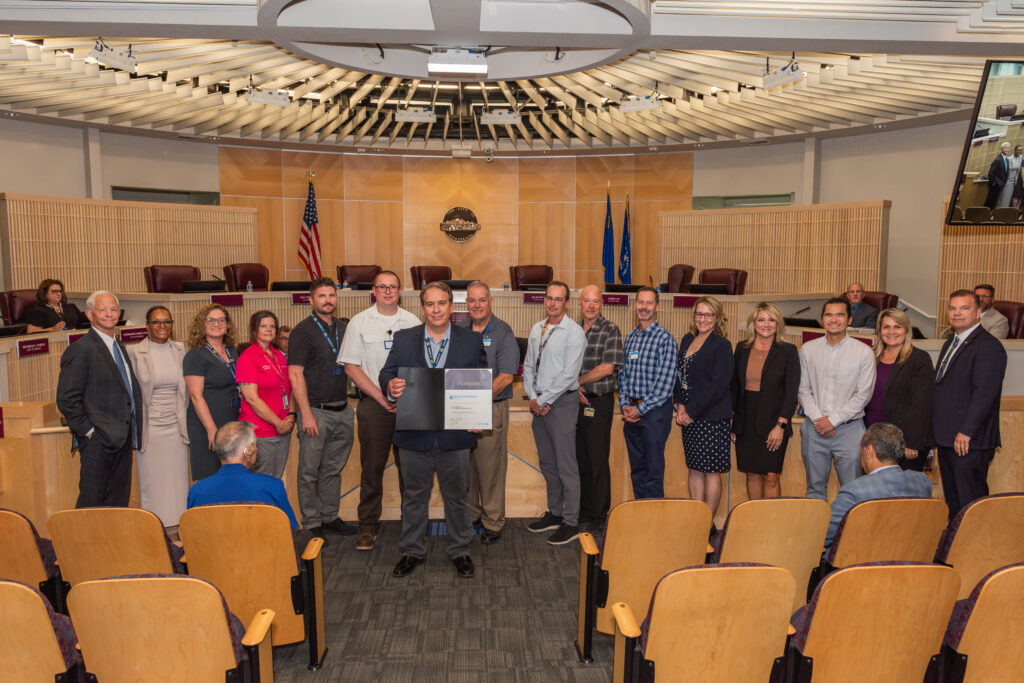
An Award-Winning Finish
The project was officially completed in April 2026, on time and within budget. The facility now treats up to 44 million gallons of wastewater per day.
The recognition followed; the Kurt R. Segler WRF received its 21st consecutive National Association of Clean Water Agencies (NACWA) Peak Performance Award. This award celebrates facilities in compliance with the Clean Water Act National Pollutant Discharge Elimination System. The Kurt R. Segler WRF earned Platinum status, maintaining 100% compliance beyond the initial award.
The city also received the American Planning Association’s (APA) 2026 Award for Excellence in Sustainability – Environment, Climate and Energy for the city’s innovative water conservation initiative, H2One: Henderson’s Call to Conserve.
The City of Henderson Mayor and Council celebrated the Department of Utility Services’ $100 million investment in the Water Reclamation Facility and proclaimed June 2, 2026, Infrastructure Investment Day.
“The team is especially proud that the project was completed safely, remained environmentally responsible, maintained regulatory compliance and has already demonstrated successful operation during its first several months of service,” said Howell. “The expansion represents both a major infrastructure investment and a testament to the expertise, innovation and commitment of City employees.”
Photos courtesy of the City of Henderson, Nevada.
By Sofia Feeney. She is the Editor at American Infrastructure and can be reached at sofia@builder.media.
This story is featured in our July/August issue of American Infrastructure. Read the digital print version here.
This story is featured on our Instagram, Facebook, X and LinkedIn.