Fulton County’s Most Ambitious Project
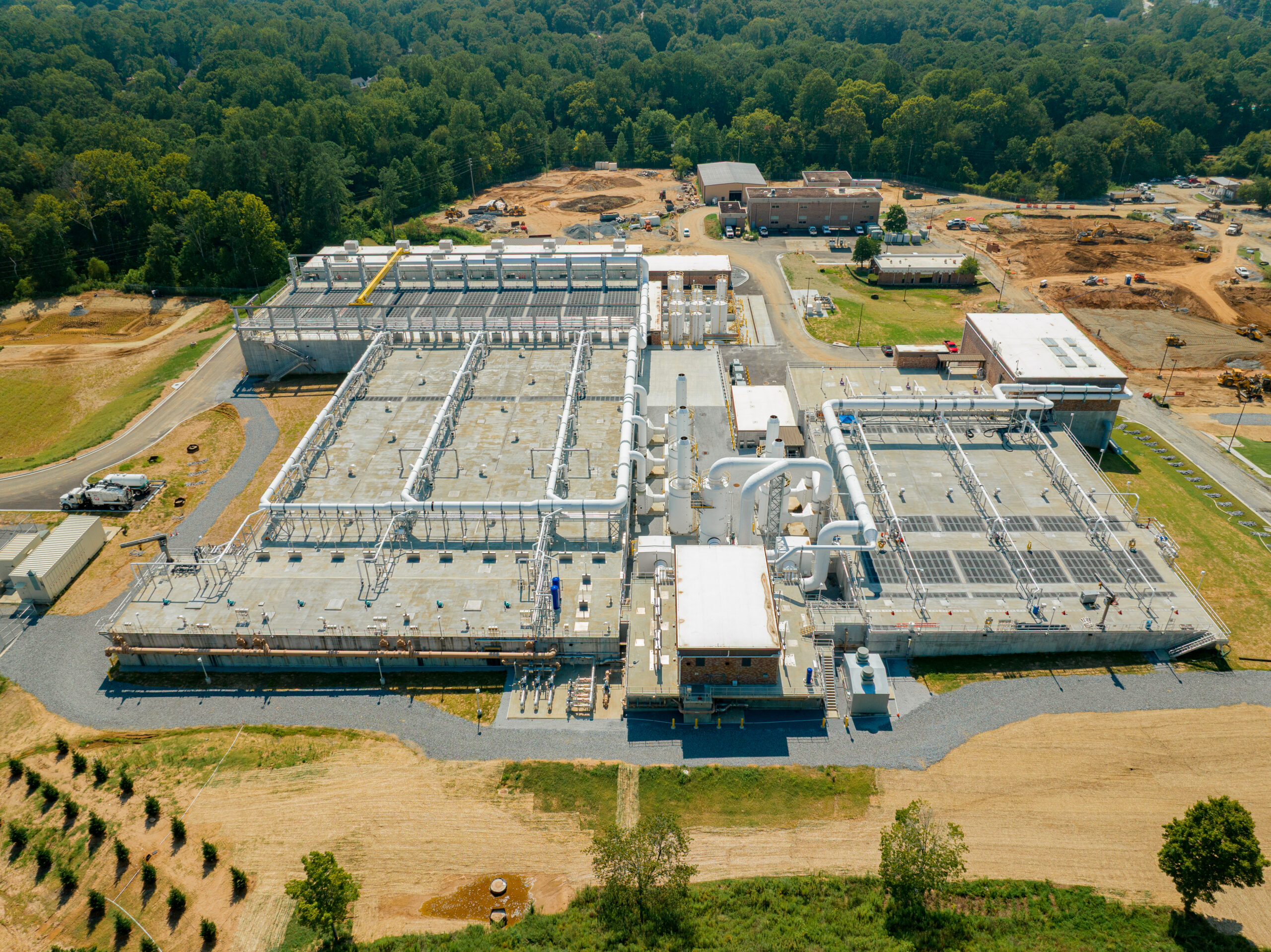
For half a century, Fulton County has operated a water treatment facility at Big Creek, a 26.5-mile-long stream in Forsyth and Fulton counties in Georgia. Originally built in 1971, the Big Creek Water Reclamation Facility (WRF) treated 750,000 gallons of water per day when it first began operation.
By 2017, the Big Creek WRF was approaching the end of its design life cycle, prompting the need for a more reliable, higher-performing and expandable facility.
The new Big Creek WRF Expansion not only addresses aging infrastructure, but has made history as Fulton County’s largest infrastructure investment; a fitting title since the Big Creek WRF is also Fulton County’s largest water reclamation facility.
The upgraded project serves more than 250,000 residents in North Fulton County and has increased capacity from treating 24 million gallons per day (MGD) to 32 MGD.
Overcoming Construction Challenges
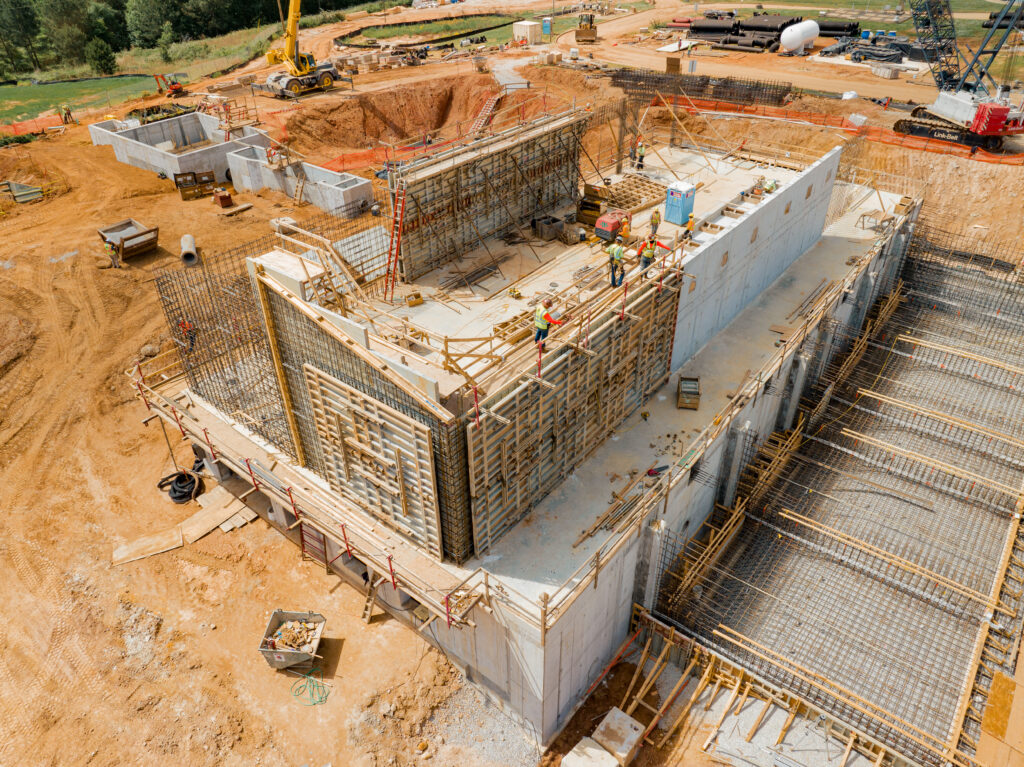
Constructing a new advanced treatment facility on an active wastewater treatment site, while maintaining uninterrupted service and permit compliance, is no easy task, but one that the team did not shy away from.
Through detailed planning, frequent coordination and carefully sequenced tie-ins, many of which occurred during low-flow overnight periods, the team was able to ensure a smooth construction process without impacting the active wastewater treatment.
Difficult subsurface conditions near the Chattahoochee River occurred, including alluvial soils and variable granite bedrock. This prompted the team to develop innovative measures.
Major structures required deep foundations, including over 1,000 auger-cast pipes. In congested areas, such as the membrane gallery, deep, structural slab solutions allowed the building to be supported on piles while creating space for piping, electrical systems and a control conduit.
The project also experienced unexpected obstacles from the COVID-19 pandemic, hyperinflation and supply-chain disruptions. Across its nearly eight-year construction period, the project required flexibility and strategic solutions to reduce contagion outbreaks and project delays, while still maintaining ongoing plant operations.
Fulton County’s Department of Public Works, alongside the project designer, engineer and contractor, were up for the challenge. The expansion was completed within budget expectations at $350 million and went into operation in October 2025.
Diving Deeper in Design
The expansion’s primary goals were to increase the facility’s treatment capacity and to improve effluent quality discharged to the Chattahoochee River, while supporting the nearby communities’ growth in an environmentally-conscious manner.
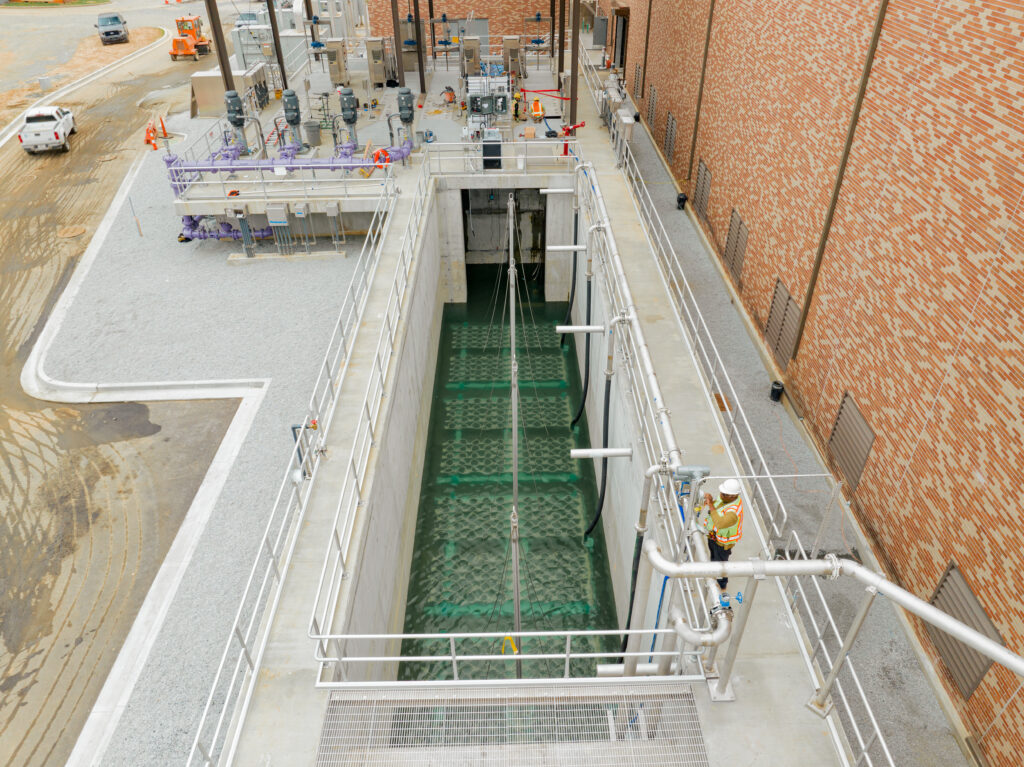
The Big Creek WRF Expansion includes several major environmental and energy-efficient features. The conversion from conventional treatment to membrane bioreactor technology significantly improved effluent quality and reduced nutrient loading to the Chattahoochee River. The upgraded facility reduces nitrogen and phosphorus loading by more than 250,000 pounds per year, providing a much higher level of treatment for a river that is both a protected trout stream and a major downstream drinking water source.
One of the new facility’s most prominent design features is the full-gravity hydraulic configuration, including gravity flow through the membrane bioreactor (MBR) design, which combines biological wastewater treatment with low-pressure ultrafiltration or microfiltration membranes.
“This makes the facility a national benchmark for large-scale gravity MBR design,” said David Clark, Fulton County Director of Public Works.
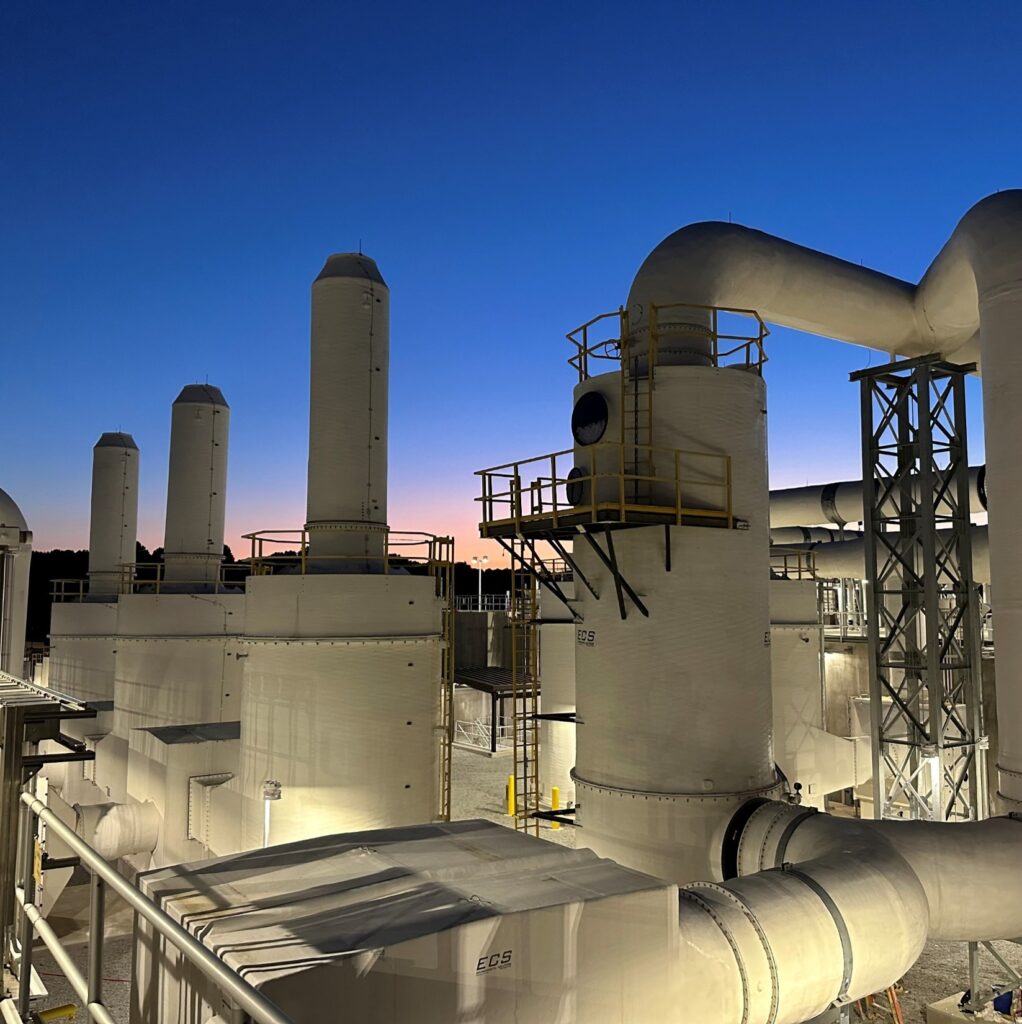
Additional upgrades include ammonia-based aeration control, high-efficiency blowers, extensive online monitoring and a major odor control system. The team described integrating modern upgrades into existing infrastructure was as complex as it was rewarding.
The Payoff
The expansion also made the new facility easier to operate and maintain, reduced long-term lifecycle costs and resolved existing odor impacts to nearby neighborhoods. While the primary goal was to increase the facility’s current capacity, the project also needed to provide a clear path for future expansion to 38 MGD without requiring extensive construction. This complex project achieved that and more.
After years of collaboration, planning and construction, the Big Creek WRF Expansion was honored with numerous awards, including the 2025 American Consulting Engineers Council Engineering Excellence Awards – State Award, the 2025 Design-Build Institute of America National Award of Merit, the 2026 Georgia American Concrete Institute Awards – Public Works First Place Award and the 2026 American Academy of Environmental Engineers and Scientists Excellence in Environmental Engineering & Science National Award.
“The County’s largest project, delivered during the most difficult construction period in recent memory, can be considered one of the most successful projects completed,” said Clark. “The facility lowers long-term energy and chemical use and creates a more resilient treatment system for future generations.”
Photography courtesy of Archer Western/Brown and Caldwell JV.
By Taylor Moore. She is the Assistant Editor at American Infrastructure and can be reached at taylor@builder.media.
This story is featured in our September/October issue of American Infrastructure. Read the print version here.