AI Interview: Heather Collins President of the AWWA
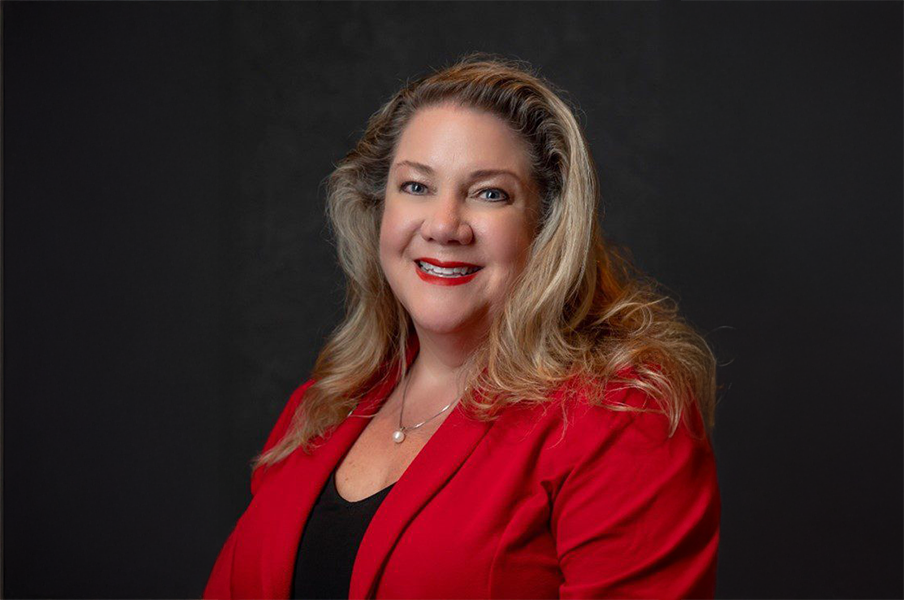
 Heather Collins discusses her initiatives as president of the American Water Works Association (AWWA), strategic collaborations beyond the water industry and the future of water security and management
American Infrastructure: AWWA represents a wide spectrum of utilities, from major cities to rural areas. How has your presidency reflected this operational diversity?
Heather Collins: One of the greatest strengths of AWWA is that we represent the full breadth of the water community. Our members serve large metropolitan regions, small towns, rural communities, tribal systems, investor-owned utilities, manufacturers, consultants, regulators, academics and the next generation of water professionals. That diversity is what makes AWWA so effective.
My perspective as AWWA President is also shaped by my work at the Metropolitan Water District of Southern California (Metropolitan), a regional wholesaler serving 26 member agencies that collectively provide water to nearly 19 million people. In that role, I see firsthand how complex modern water service has become. Metropolitan must plan for imported supplies, local resource development, treatment operations, climate variability, emergency response, infrastructure reliability, affordability and regional coordination across a large and diverse service area.
That experience reinforces a lesson that applies across the country: every utility, regardless of size, is managing risk. The scale may differ, but the responsibility is the same.
Whether a utility is serving 2,000 people or 20 million, it must protect public health, maintain reliable service, invest in infrastructure, comply with evolving regulations and communicate clearly with the public.
Throughout my presidency, I have elevated that shared mission while recognizing that solutions cannot be one-size-fits-all. AWWA’s role is to provide the standards, training, advocacy and peer-to-peer connection that help every utility build capacity, whether they are managing a complex regional system or operating with a small staff and limited resources.
AI: One focus of your presidency at AWWA is expanding strategic collaborations beyond the water sector. Can you explain your success in expanding these collaborations?
HC: Water issues are rarely just water issues. It is connected to public health, energy, emergency response, housing, agriculture, land use, technology, economic development, cybersecurity and community trust.
One of my priorities has been to help position AWWA as a convener not only within the water sector, but also across sectors that influence water outcomes.
That perspective is very real in Southern California. At Metropolitan, regional water reliability depends on collaboration among member agencies, state and federal partners, environmental interests, regulators, community leaders, emergency managers and neighboring states. Projects like Pure Water Southern California, a major regional recycled water partnership, is one example of what that looks like in practice, requiring coordination across agencies and disciplines to advance long-term water reliability.
That same collaboration mindset applies to AWWA’s work. AWWA has always had strong technical credibility, which gives us a solid foundation on which to build broader strategic partnerships. We need to be at the table with public health leaders when we talk about emerging contaminants. We need to be engaged with cybersecurity and national security partners as utilities face evolving digital threats. We need to work with affordability advocates and policymakers as communities struggle with the true cost of water service. We need to collaborate with technology providers while ensuring that innovation is practical, safe and aligned with utility realities.
Water 2050 has been an important platform for this work. It encourages us to think beyond traditional boundaries and ask what kind of water future we want to build. The recommendations that emerged from Water 2050 point us toward collaboration, innovation, resilience, affordability, equity and governance models that reflect the interconnected nature of water.
Success, to me, is not simply forming partnerships. It is creating partnerships that produce useful outcomes for utilities and communities. That means better policy, better technical resources, better public understanding and stronger support for the people responsible for delivering safe water every day.
AI: What are some water challenges we should be focusing on?
HC: The water sector is facing a convergence of challenges and none of them can be viewed in isolation.
Aging infrastructure remains one of the most urgent issues. Many utilities are managing systems that were built decades ago and the pace of renewal and replacement is not keeping up with need. At Metropolitan, we see this through the lens of regional reliability. Our investments must support treatment, conveyance, storage, distribution, emergency operations and the long-term ability to serve millions of people across Southern California.
At the same time, the cost of construction, materials, labor, treatment, energy, regulatory compliance, and financing continues to rise. As AWWA’s Beyond the Replacement Era report shows, utilities will need to invest $2.1 to $2.4 trillion in drinking water infrastructure over the next 25 years. That puts real pressure on affordability for households and financial sustainability for utilities.
We cannot talk honestly about water infrastructure without talking about cost drivers and affordability.
We also need to focus on source water protection and climate resilience. Drought, flooding, wildfire, extreme weather and changing hydrology are no longer future risks. They are current operating conditions. In Southern California, that reality includes planning for imported water uncertainty, local supply development, recycled water, conservation, storage and emergency response.
Emerging contaminants, including PFAS, are another major challenge. Communities expect safe water and utilities are committed to providing it. But we also need policy frameworks that hold polluters accountable and do not place the financial burden solely on ratepayers and communities that had no role in creating the contamination.
Cybersecurity is also a top-tier concern. Water systems are part of the nation’s critical infrastructure and the sector needs practical, scalable cybersecurity support that recognizes the differences between large and small utilities.
Finally, we need to focus on public trust. Compliance alone does not guarantee confidence. People need to see their water providers, hear from them, understand the value of water service and trust that decisions are being made with their health and community in mind.
AI: What major lesson did you learn early on in your career that still affects infrastructure planning and decision making today?
HC: Early in my career, I learned that infrastructure decisions are never just technical decisions. They are public health decisions, financial decisions, community decisions and generational decisions.
That lesson has only deepened through my work at Metropolitan. When you are planning and operating infrastructure that supports a region of nearly 19 million people, you understand that reliability is not theoretical. It depends on treatment plants, pipelines, reservoirs, pumps, power, operators, emergency coordination, regulatory compliance and long-term investment decisions that may take decades to fully realize.
In water, the choices we make today often shape service reliability for generations. A pipe, treatment facility, reservoir, or recycled water project is not simply a capital asset. It is a commitment to future communities. That means we have to look beyond the immediate project and ask: What risk are we reducing? What flexibility are we creating? What burden are we placing on future ratepayers? How will this decision perform under conditions that may look very different from today?
I also learned the importance of listening to operators and front-line staff. They understand how systems behave under stress. They know where vulnerabilities exist. At Metropolitan, that operational knowledge is essential, whether we are managing routine treatment operations, responding to wildfire impacts, coordinating with member agencies, or planning future supply projects.
Good infrastructure planning requires technical discipline, operational reality, financial transparency and a clear sense of public responsibility.
We owe communities not just projects that are built, but systems that work when they are needed most.
AI:Can you tell us about ACE26 and what attendees can expect from the event?
HC: ACE26 will be held in Washington, D.C. It will be an important gathering for the water community at a pivotal time. Attendees can expect the full strength of AWWA: technical excellence, policy engagement, innovation, networking and a shared commitment to safe and reliable water.
ACE is where the sector comes together to learn from one another. There will be sessions on infrastructure renewal, treatment, emerging contaminants, cybersecurity, utility management, affordability, workforce, reuse, resilience, communications and innovation. It is also an opportunity to connect across utility sizes, disciplines, regions and career stages.
For me, ACE is powerful because it connects national policy with on-the-ground utility reality.
The conversations we have in Washington, D.C., about infrastructure investment, regulatory implementation, affordability, resilience, cybersecurity and source water protection directly affect the people who operate and manage systems every day.
Because ACE26 is in Washington, D.C., the policy angle will be especially meaningful. Water infrastructure, affordability, resilience, cybersecurity and public health all require strong federal partnerships. ACE gives us a chance to elevate the needs of the water sector and demonstrate the professionalism and commitment of the people behind the systems.
What I love most about ACE is that it reflects the entire water community. You can be a young professional attending for the first time, an operator looking for practical tools, a utility executive working through strategic challenges, a manufacturer showcasing new technology, or a policymaker trying to understand what utilities need. There is a place for everyone.
AI:What makes you optimistic about the future of the water sector?
HC: The people make me optimistic.
Everywhere I go on behalf of AWWA and every day in my work at Metropolitan, I meet water professionals who are deeply committed to their communities.
They are problem-solvers. They are public health protectors. They are innovators. They are mentors. They are people who show up during storms, fires, main breaks, contamination events, cyber incidents and everyday operations that most customers never see.
I am also optimistic because the sector is becoming more willing to think differently. We are talking more openly about affordability, trust, equity, workforce, technology, climate resilience, recycled water, watershed-scale thinking and collaboration. We are recognizing that the future of water will require both technical excellence and stronger relationships with the communities we serve.
Projects like Pure Water Southern California also give me optimism. They show how the sector is moving toward more resilient, diversified and sustainable supply portfolios. These projects are complex and require careful planning, regulatory partnership, public engagement and disciplined investment, but they also demonstrate what is possible when utilities look ahead and commit to long-term regional resilience.
The next generation of water professionals is another source of optimism. Young professionals are asking good questions, pushing for purpose-driven work and bringing new skills in data, communications, technology and community engagement. They are not just the future of the sector. They are already helping shape it.
Water has always been essential. What gives me confidence is that the people in this sector understand the responsibility that comes with that. They know the work matters and they are ready to meet the moment.
AI: Anything else you’d like to share that we didn’t cover?
HC: I would emphasize that water is both invisible and invaluable. When systems work well, most people do not think about them. They turn on the tap, fight a fire, run a business, irrigate a park, operate a hospital, or send a child to school without considering the infrastructure and people behind that service.
Part of AWWA’s role is to make the value of water more visible. Safe, reliable water is the foundation of public health, economic strength, environmental stewardship and quality of life. But maintaining that foundation requires investment, trust, collaboration and long-term thinking.
My experience at Metropolitan reinforces that every day. Regional reliability is not built by one project, one agency, or one decision. It is built through decades of planning, partnerships, infrastructure investment, workforce development, operational excellence and public trust.
My message to American Infrastructure readers is that water deserves attention before there is a crisis. The decisions we make now about infrastructure, workforce, source water, affordability, resilience, recycled water and public trust will determine the strength of our communities for generations.
That is why I am proud to serve AWWA. This association brings together the people, knowledge and shared commitment needed to advance a better water future for all.
This interview is featured in the May / June issue of American Infrastructure, read the print version.