Solving California’s Water Salinity
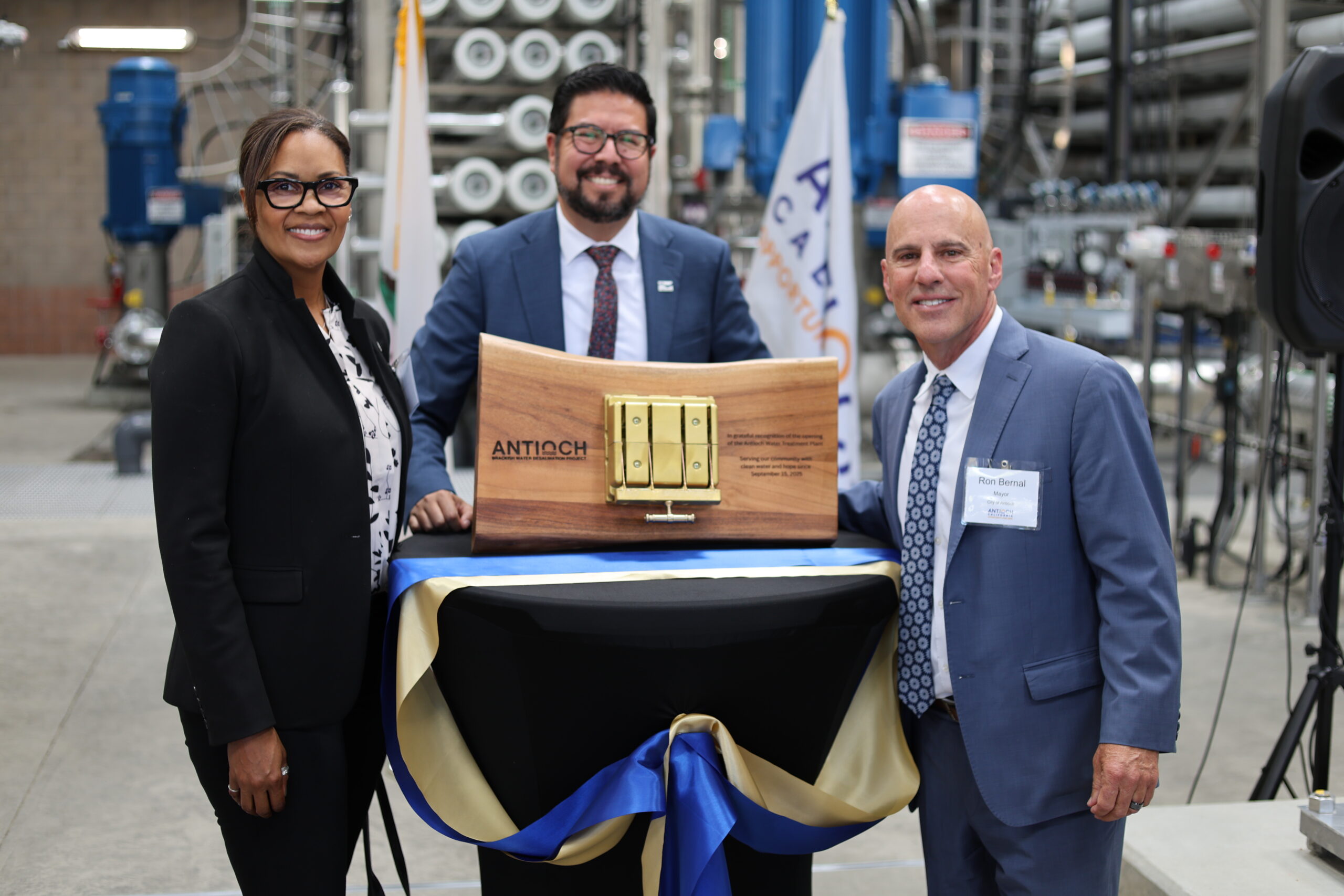
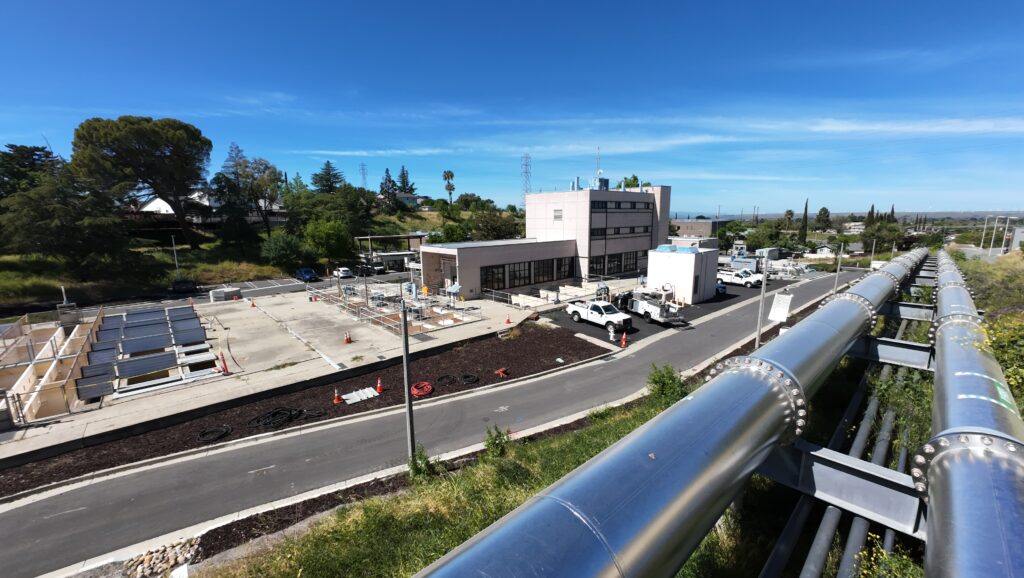
The Antioch Brackish Water Desalination Plant produces six million gallons per day (MGD) to residents in Antioch, Calif., meeting up to 40% of the city’s annual water demand. It is the first brackish water desalination plant in the Sacramento-San Joaquin Delta and the second in the San Francisco Bay Area.
Over time, climate change, drought frequency and upstream agricultural demands caused salinity levels in the San Joaquin River to rise. The project was originally pitched more than a decade ago to increase regional water resilience, address rising salinity levels and saltwater intrusion in the nearby San Joaquin River.
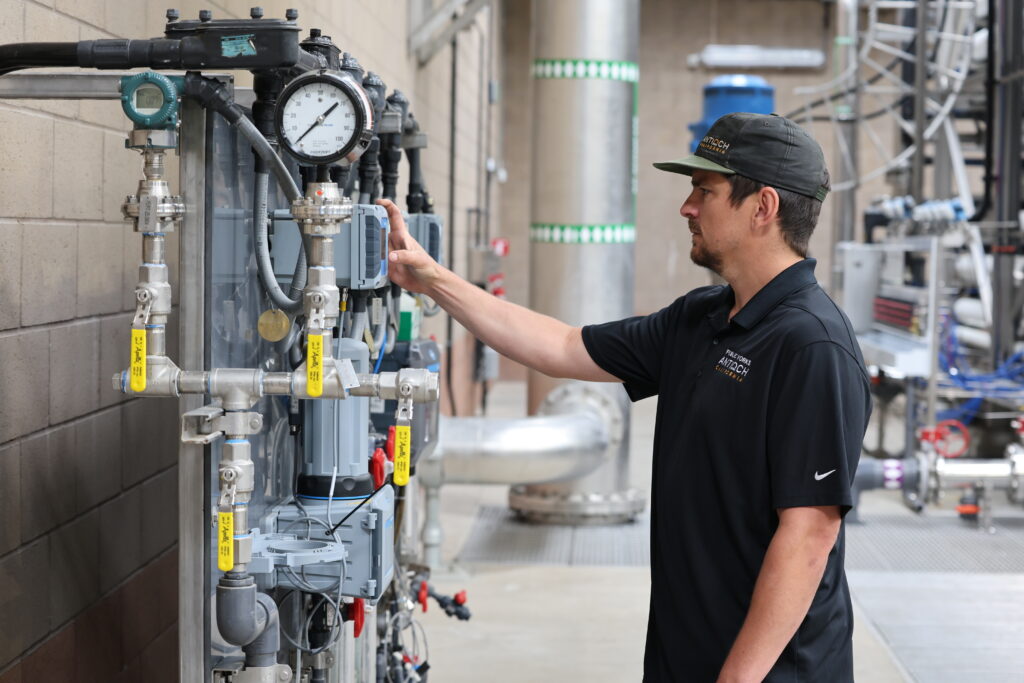
“Before the project, Antioch could only use river water when it was fresh; now the city can use its pre-1914 water rights, whether it is fresh or brackish,” said Marcus Woodland, Superintendent of the Antioch Brackish Water Desalination Plant.
Thanks to the plant’s two-stage reverse osmosis (RO) system, as well as microfiltration and ultrafiltration systems for the brackish water’s pre-treatment, the city of Antoich and the surrounding Delta Bay have water supply reliability, mitigated salinity intrusion and enhanced regional resilience.
Responsible River Planning
The Antioch Brackish Water Desalination Plant was born from the city’s growing vulnerability to saltwater intrusion in the San Joaquin River. While the city needed to address residential urgency, there was also a responsibility to the surrounding environment.
To avoid concentrated saltwater discharge entering directly into sensitive river areas, the project was constructed to work hand-in-hand with the Delta Diablo Wastewater Treatment Plant in Pittsburg, Calif.
A new pipeline was installed to transport brine 4.3 miles over to the Delta Diablo Wastewater Treatment Plant. There, the brine is mixed with treatment effluent and diluted before being discharged and returned to the San Joaquin River.
The plant’s RO system applies a high pressure of 500 psi to force water through membranes, removing salt and dissolved solids. Desalination of brackish water uses half the energy as desalination of seawater and produces about a quarter of the waste.
The project also utilizes low-velocity fish screens at its San Joaquin River intake to protect aquatic life. By operating at low approach velocities, the system minimizes impingement, the risk of fish sticking to the screen and entrainment, fish being drawn into the pipe.
Addressing Aging Infrastructure
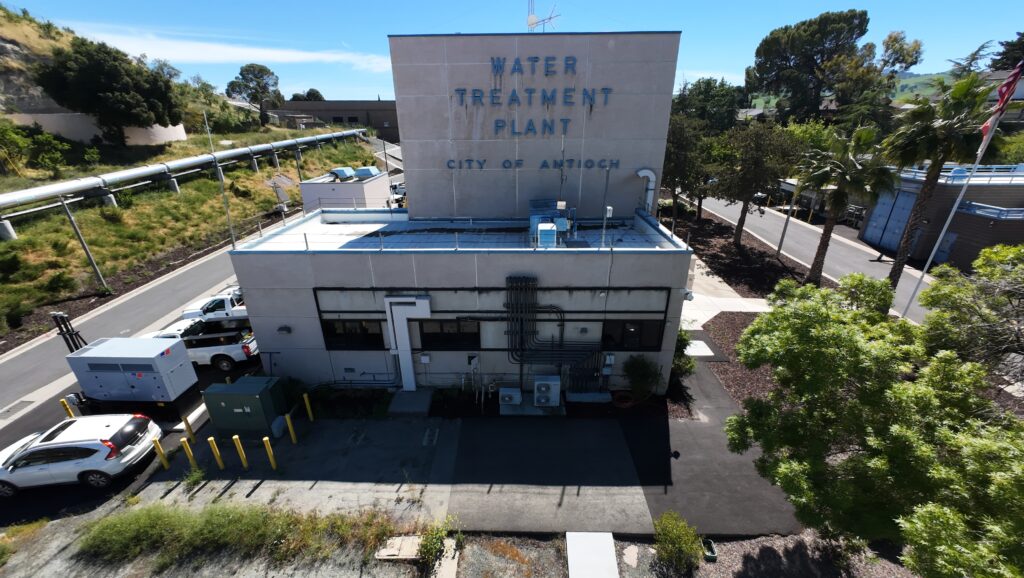
Planning for the $116 million desalination facility began in earnest in 2016. The new desalination facility was constructed at the site of the existing Antioch Water Treatment Plant (WTP), which was originally constructed in the 1940s.
Plans for the project included a new raw water intake structure and a 3,000-foot-long, 30-inch-diameter pipeline connecting the San Joaquin River to the WTP.
Woodland noted that one of the most significant challenges was integrating new systems into the plant’s existing infrastructure.
Integrating an established WTP from the 1940s into a state-of-the-art desalination plant required patience and careful planning, from infrastructure modifications and to overcoming project interruptions. Such interruptions included the COVID-19 pandemic delaying construction and supply chain issues that occurred in 2022. Staff from the plant had to work closely with the design engineer and construction crews to plan and execute as a unit.
The existing San Joaquin River intake pump station had to be replaced with a bypass pipeline so that the city’s reservoir would not be contaminated by the brackish water. The new intake pump station has three 600 horsepower, medium-voltage, vertical turbine pumps to transfer water from the San Joaquin River into the plant.
The new intake pump uses three 8 MGD pumps, each protected by low-velocity fish screens for marine preservation.
“The new river intake pump station was built using environmental protections designed to safely divert Delta water while minimizing harm to local aquatic life,” said Woodland.
A Challenge Well-Received
The challenge paid off, with the project receiving multiple awards.
Woodland was recognized with the Exemplary Operations Supervisor Award in March 2026 from the American Water Works association.
The American Council of Engineering Companies in California presented the city of Antioch and the Carollo engineers with a Merit Award in February 2026 for the project’s complexity and its value to the community. The American Public Works Association Northern California Chapter named the plant a 2026 Project Award Winner in March.
In April, the U.S. Environmental Protection Agency recognized the city with the Excellence in Infrastructure Designed for the Future Award, for the project’s innovative and resilient approach to securing drinking water during droughts.
Woodland expressed immense pride for his team for leading the way in water resilience and that the Antioch Brackish Water Desalination Plant provides water security statewide.
By Taylor Moore. She is the Assistant Editor at American Infrastructure and can be reached at taylor@builder.media.
This is featured in the May/June issue of American Infrastructure. Read the print version here.