Revitalizing the North Bay’s Most Vital Route
The Marin–Sonoma Narrows (MSN) project targets one of the most well-known bottlenecks on US-101 between Novato in Marin County and Petaluma in Sonoma County, a corridor long affected by daily congestion, limited transit benefits and aging infrastructure. The improvements aim to restore mobility and safety along one of California’s most vital north–south highways.
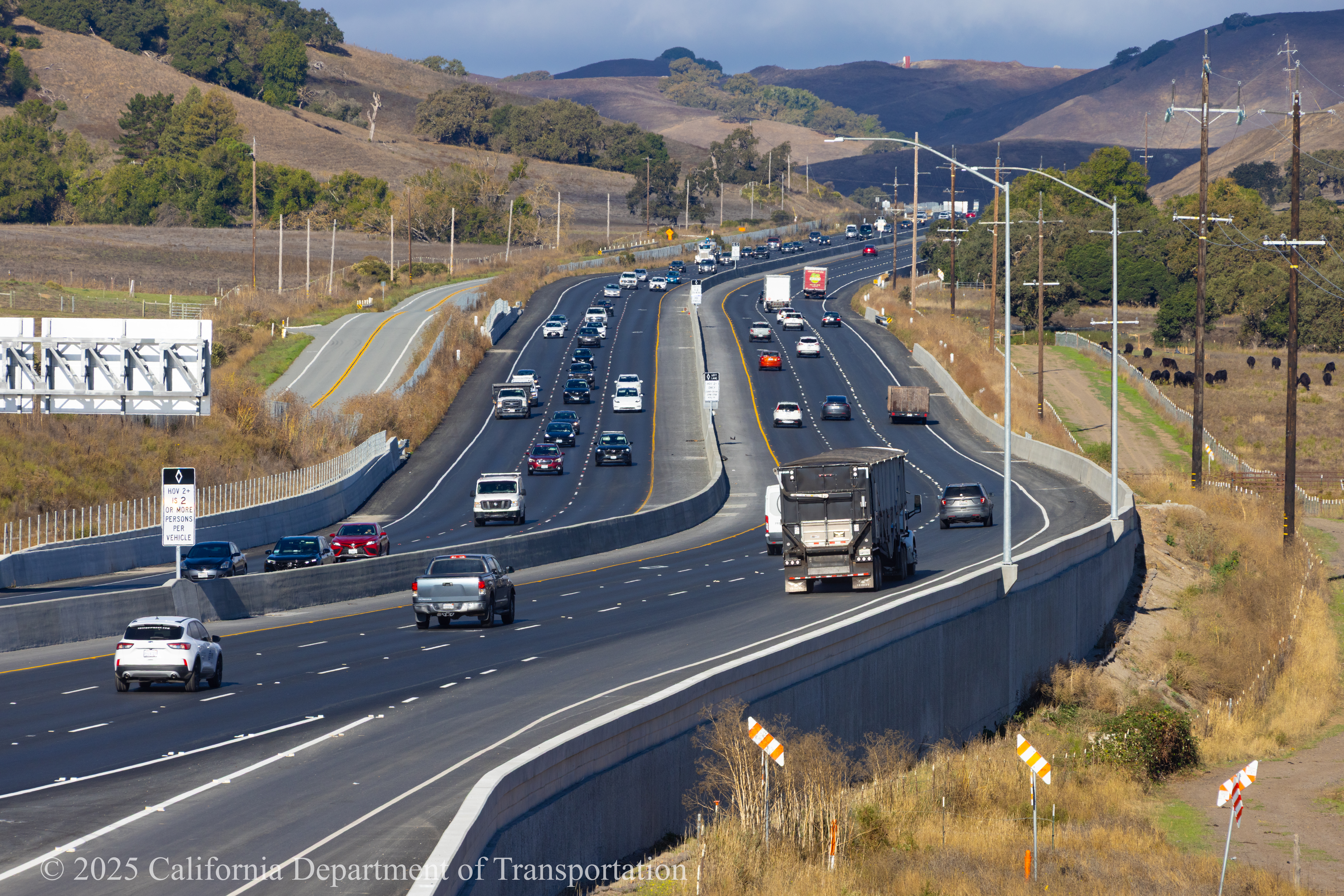
The project’s primary goal is to widen the highway by adding one high-occupancy vehicle (HOV) lane in each direction, creating a continuous carpool system through the North Bay. The upgrades improve HOV capacity, reduce delays, support higher-capacity travel modes and modernize the corridor. The route serves commuters traveling between Marin and Sonoma counties, including Novato, Petaluma, Rohnert Park and Santa Rosa, and links directly to the broader Bay Area economy. By relieving congestion and offering more reliable travel, the improvements support regional growth and reduce travel times for thousands each day.
“The coordination of funding, design and construction across multiple agencies allowed the project to advance in pieces while maintaining overall corridor vision,” said Ronald Sangalang, regional project manager for Caltrans.
Economic, Social and Environmental Impact
Local jurisdictions have broadly supported the project as a long-awaited mobility improvement for North Bay communities. Economically, the widened corridor boosts productivity, cuts delay-related costs and strengthens access between jobs and housing. Socially, it expands access to employment, education and essential services for residents across both counties. Environmentally, the project encourages higher-occupancy travel, reduces stop-and-go emissions and modernizes drainage and flood resilience along the corridor.
Behind the Construction
The effort to rebuild and modernize the highway came with significant challenges. In the Narrows segment, a confined cross-section, minimal shoulders and aging structures created major obstacles for widening and realignment work. Engineers widened medians and travelways, added full inside and outside shoulders and modified or replaced major structures, including the San Antonio Creek Bridge, Franklin Avenue Overcrossing and the Petaluma River Bridge.
The team also had to integrate new drainage and stormwater systems without disrupting existing utilities, which required extensive mapping and staged relocations. These elements added to the project’s logistical difficulty and required continuous coordination among engineering teams, environmental specialists and field crews to keep construction on schedule.
Maintaining traffic flow during construction remained a major challenge, with the corridor carrying up to 146,000 vehicles and 6,200 trucks per day. The team used phased construction, lane shifts, night work and temporary alignments to keep lanes open during peak hours while work progressed.
Funding also required careful phasing. Because corridor improvements ranged widely in cost, the project was divided into subprojects—A, B and C, and their respective segments—allowing each to advance as funding became available and operational needs dictated.
In the final B7 segment, the team used modern staging and traffic-shift techniques, including routing southbound traffic onto newly elevated lanes supported by temporary reinforced embankment walls, ensuring continuous movement during construction. These methods supported bridge widening, median expansion and improved roadway alignments. Long-term durability was a core focus, with upgrades to current freeway standards, enhanced drainage and flood protection, full shoulders for safer maintenance and controlled- access design to extend pavement and structural life.
Collaboration
The MSN project was delivered through a broad multi-agency partnership. Caltrans District 4 served as the lead for design, environmental review and construction administration. The Transportation Authority of Marin and the Sonoma County Transportation and Climate Authority provided funding, oversight and coordination within their counties. The Metropolitan Transportation Commission contributed regional funding and aligned the project with Bay Area transportation priorities.
Originally presented as three separate efforts, the subprojects were combined into a single corridor study to ensure cumulative environmental effects were addressed in a comprehensive Environmental Impact Report and Environmental Impact Statement. This coordinated approach allowed phased construction to advance without losing sight of the overall plan.
Looking Ahead
The widening and continuous HOV-lane segment of the US‑101 officially opened on Sept. 29 for the northbound and southbound lanes. As the full US-101 widening nears completion in 2026-27, remaining work includes final elements of subprojects B6 and B8, covering bridge renovations, utility relocations, landscaping, aesthetic treatments and final corridor improvements. Several segments, including B3, B2 Phase II and C2, have already been recognized as finalists for California Transportation Foundation awards, highlighting their engineering excellence and regional significance.
“As final construction continues, the MSN project’s legacy extends beyond added lanes. It represents a new era of integrated, sustainable and collaborative transportation planning in the North Bay,” Sangalang said. “With the Narrows finally eliminated, Marin and Sonoma counties are now more connected—economically, socially and environmentally—than ever before.”
This is featured in our November/December issue of American Infrastructure, read more here