The Mount Holly Pump Station Revitalizes Water Infrastructure in North Carolina
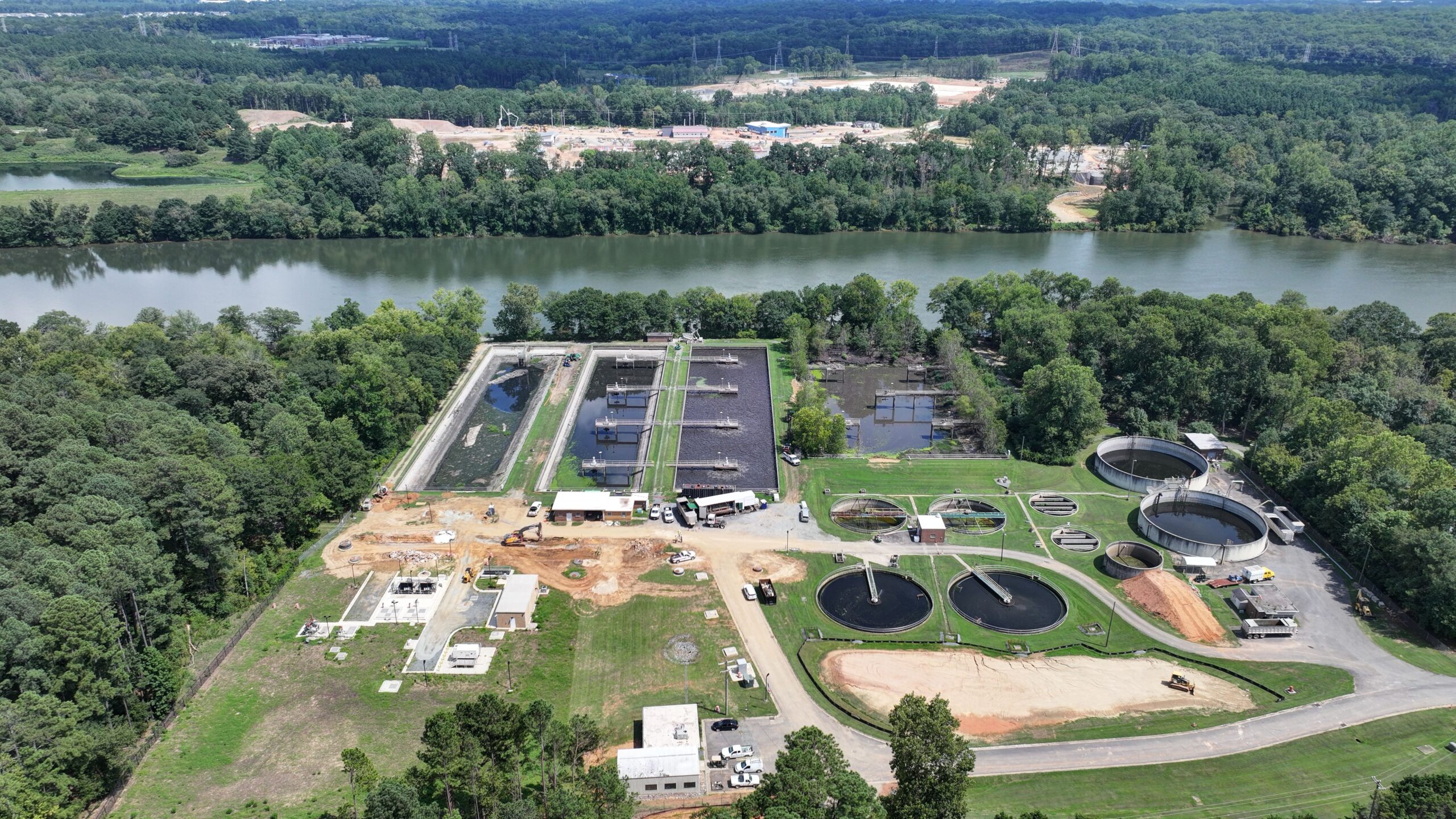
The new Mount Holly Pump Station, located in North Carolina, at Tuckaseege Park, began service this September. Charlotte Water partnered with the City of Mount Holly and the City of Belmont to implement a regional partnership for future wastewater management to serve communities in northwestern Mecklenburg County and eastern Gaston County.
Mount Holly Pump Station is part of the larger Stowe Regional Water Resource Recovery Facility (RWRRF) project located along the Catawba River in Mecklenburg County. It will be owned and operated by Charlotte Water and will ultimately treat wastewater flows from the existing Charlotte Water service areas in northwestern Mecklenburg County, as well as the City of Mount Holly and the City of Belmont under an intra-governmental service agreement with these municipalities.
Planning for the Stowe RWRRF began in 2006, when regional studies showed the growing Mount Holly and western Mecklenburg County areas would soon exceed existing wastewater treatment capacity, and the facilities construction officially began in 2022. The upgrade was very necessary as the region is rapidly growing, meaning there will be more wastewater to process and treat. ”Between 2014 and 2034, the population in the Stowe service area will increase by 136% with approximately 100,000 new residents moving there,” said Camden Coley, Communications Specialist at Charlotte Water. “The expansion will substantially increase the amount of wastewater that is produced by residents and businesses in this area, and that wastewater must be collected and treated.”
The project team focused on the environmentally conscious and energy efficient aspects in the building process, by combining three wastewater treatment plants into one state-of-the-art facility. The new Stowe Regional Facility will benefit the environment by more effectively purifying treated wastewater, minimizing the distance wastewater must be pumped for treatments and reducing the number of treatment plants discharging treated water into the Catawba River.
Additionally, the wastewater treatment plant increases water volume in Lake Wylie, supporting local needs such as power generation, cooling water, low-flow supplementation and drinking water. Water quality is a central highlight: modeling of Lake Wylie shows that impacts from the proposed wastewater treatment plant would be minor and limited to the upper reaches of the lake, with predicted concentrations of total nitrogen, total phosphorus and chlorophyll-a remaining below North Carolina and South Carolina water quality criteria. Conveniently, the Stowe RWRRF’s administration building will be LEED certified and will use energy-efficient equipment along with onsite reuse water for irrigation, flushing and HVAC needs.
Community involvement is crucial to a project like this one. Over the past several years, Charlotte Water has worked closely with its community stakeholder committee to shape plans for the Stowe RWRRF and the accompanying Community Benefit Project. Throughout this process, the utility listened carefully to committee members to ensure a clear understanding of the project community’s needs and priorities. Following extensive engagement with both the committee and the broader Stowe Project community, Charlotte Water elected to pursue a multi-component Community Benefit Project. As part of this effort, the utility secured a 90-acre parcel to preserve the natural environment for future generations, which will include walking trails and educational partnerships with area schools.
“The community provided more than 450 survey responses and 13 unique ideas, with themes
centering on preserving the natural landscape of the tranquil area and increasing access to outdoor spaces for recreation and education,” said Coley.
Multiple contracts, delivery methods, contractors, engineers and independent cost estimators are involved in advancing the Stowe RWRRF and its related pump station and forcemain projects. An estimated 30 to 50 internal team members also collaborate on operations and maintenance needs for the facility. This extensive coordination ensures accurate, timely and consistent communication among regulatory agencies and stakeholders as the project moves forward.
The committee includes representatives from the Catawba Lands Conservancy, Catawba Riverkeeper Foundation, Crescent Communities, DRB Group, Gaston County, Mount Holly Chamber of Commerce, Mount Holly Utilities Committee, Out Teach, Sierra Club North Carolina and U.S. National Whitewater Center, etc.
With great collaboration, Mount Holly Pump Station is now in service in transferring approximately 2-3 million gallons per day under the Catawba River to Charlotte Water for further treatment.
“Stowe Regional Water Resource Recovery Facility isn’t just the product of a single individual, team or entity,” said Nicole Bartlett, Engineering Division Manager and Stowe Project Manager. “It is the product of years and thousands of hours of hard work by municipal partners, design engineers, contractors and members of the CLTWater team.” This collective effort is what makes the initiative deserving of recognition as the 2025 Wastewater Project of the Year.
This is featured on our November/December issue of American Infrastructure Magazine, read more here.