Hydropower: A Sustainable Energy Solution
Hydropower is a renewable, sustainable energy source that generates electricity by using the natural flow of moving water to spin turbines, accounting for more than 14% of global electricity generation.
The birth of the modern hydropower turbine began in the mid-1700s with the revolutionary Architecture Hydraulique, covering the design of water pumps, mills, harbors and fountains. It was among the first works to apply integral calculus to technical engineering problems.
Fast forward to 1880, a dynamo, a device that converts mechanical energy into electric energy powered by a water turbine, provided power to a theater and storefront in Grand Rapids, Mich. A year later in 1881, a dynamo connected to a turbine in a flour mill supplied power to street lights in Niagara Falls, N.Y. In both instances, the dynamos and turbines used direct current technology, which is effective over short distances.
A breakthrough in alternating current later allowed power to be transmitted longer distances, ushering in the first commercial hydropower facility in the United States: The 1893 Redlands Power Plant in California. The plant used the natural flow of water from the nearby Mill Creek to power nearby communities through alternating current technology. The success of the Redlands Power Plant, as well as other facilities that were later built across the nation, helped position hydropower to become the primary method of energy transmission that it is today.
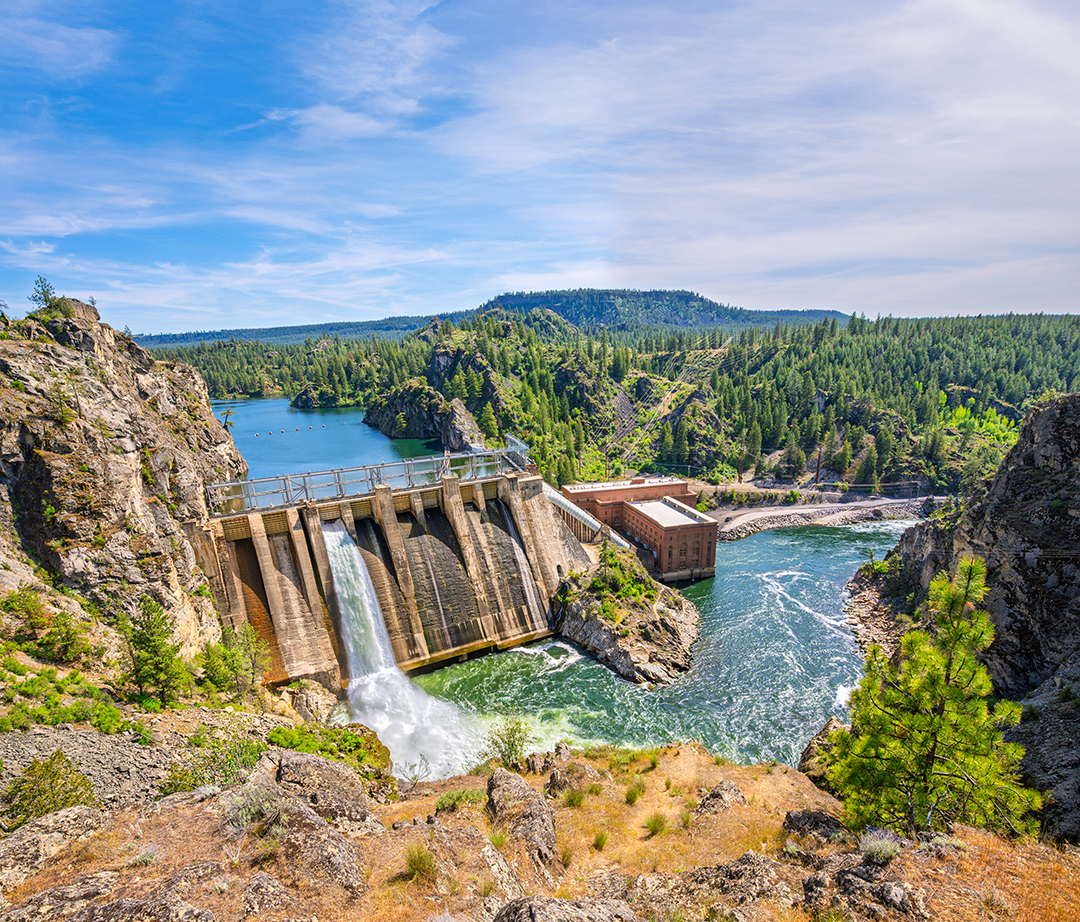
The Long Lake Dam is a hydroelectric facility on the Spokane River in Washington. Built in 1915 to originally serve rural communities and provide power for mining operations, the dam created the 24-mile-long Lake Spokane, also known as Long Lake. Located northwest of Spokane, it was once the world’s highest spillway dam, standing at 213 feet high. The dam produces, transmits and distributes electricity to nearly 418,000 customers and natural gas to about 382,000 customers across 30,000 square miles and four northwestern states.
In 2016, spillway deflectors were installed to the Long Lake Dam, improving water quality by reducing total dissolved gas to protect aquatic life. In 2022, the Long Lake hydroelectric plant was inducted into the Hydro Hall of Fame at HYDROVISION International.
Today, the Long Lake Dam is a reliable source of regional renewable energy and powers over 53,000 homes. The dam is scheduled for an upgrade that will modernize four generator units, with installed capacity expected to exceed 100 MW. This amount of energy is enough to power approximately 80,000 homes. The first modernized Long Lake unit is expected to reach completion in 2029.
This is featured in the May/June issue of American Infrastructure. Read the print version here.
This story has been posted on our Instagram, Facebook, X and LinkedIn.