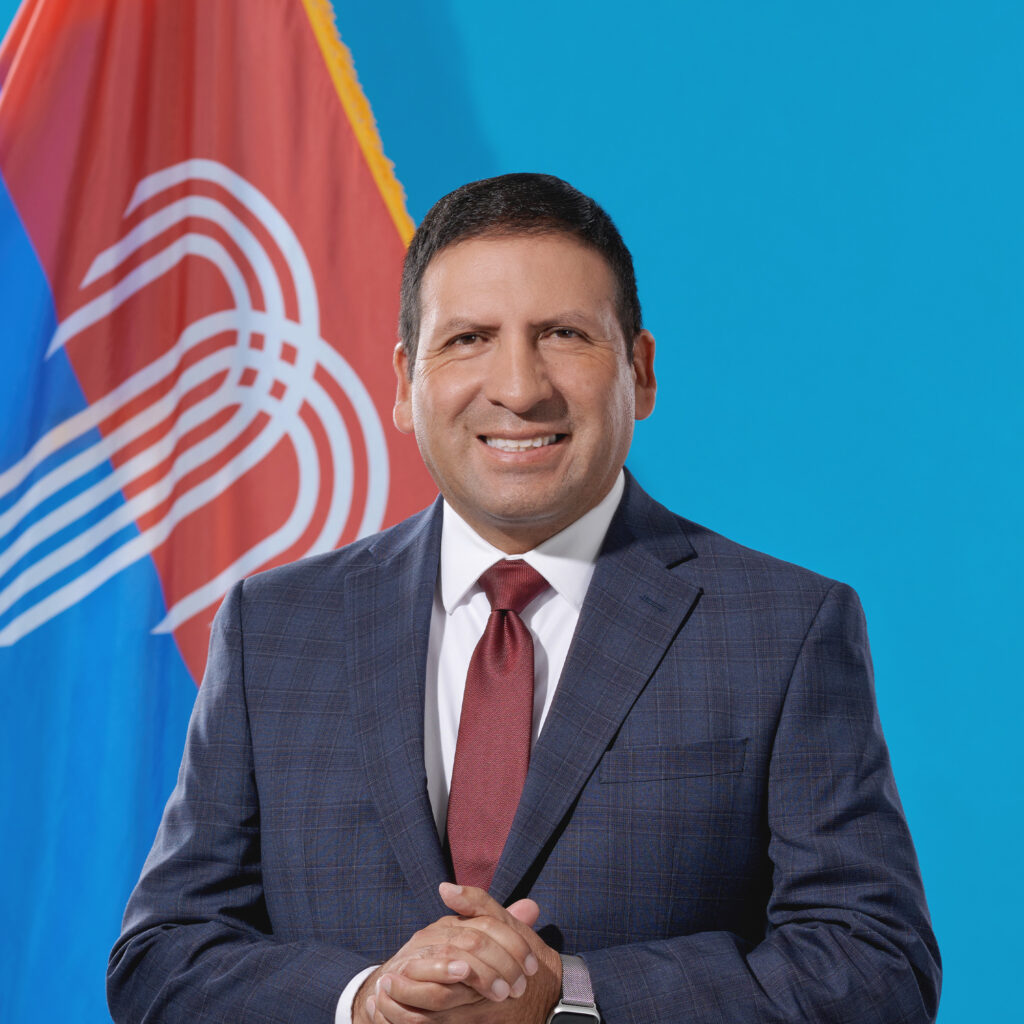
AI Interview: Mario Vasquez, City Manager of Kansas City
Mario Vasquez reflects on his first year as City Manager and gives hints on what’s to come
American Infrastructure: You started your career as an entry-level planner for Kansas City in 1997. How would you describe your path to City Manager?
Mario Vasquez: I started my career nearly three decades ago as an entry-level city planner. My first assignment was to assist in the completion of the City’s comprehensive plan, the first update in almost 50 years. In hindsight, this was an invaluable experience. It gave me the opportunity to learn about Kansas City from a unique perspective. I learned about the City’s history during that process. Not only that but I also had a front-row seat during discussions of issues that were current at the time. I watched respected members of the Kansas City community tackle complex issues of infrastructure, economic development, growth, governance, financial management, and many others. I worked with those same leaders in charting the goals and aspirations that people felt were critical for the City’s future.
Aside from giving me a crash course in the past, present, and future of the city, working on the City’s comprehensive plan as an entry level planner helped me build relationships and helped me sow seeds of trust and collaboration. Those proved to be essential in my career path.
AI: This year, what initiatives are you most proud of that improved the quality and reliability of public services?
MV: This year was about modernization, accountability, and improving how we deliver services residents depend on every day.
Shortly after my appointment, I found it necessary to restructure the office of the City Manager to better align roles, responsibilities, and expertise. I’ve been fortunate to have recruited a team of experienced professionals to serve as my assistant City Managers and I have assigned them duties that align with the goals and objectives of our Citywide Business Plan. Those are centered around the areas of finance and governance, community development, infrastructure, and public safety. This reorganization has been welcomed within and outside the walls of city hall. Our business and community leaders feel like they have a better understanding of how we work and our mayor and council members have been able to get faster results on implementation of our priorities.
In addition to our reorganization, we have continued our implementation of Priority-Based Budgeting, a new model that aligns funding with the goals and objectives of our Citywide Business Plan. This helps us ensure that our policy decisions and preferences are in line with our spending decisions.
Public safety has been at the forefront of our residents’ concerns. We were fortunate to have succeeded in renewing a sales tax for public safety which allows us to better plan for a variety of public safety needs, such as a new facilities and equipment. Our residents have signaled that this is a priority and we are working to deliver.
AI:Can you describe your biggest wins in 2025 for infrastructure development and investment?
MV: 2025 has been one of Kansas City’s strongest years for visible progress and long-term investment.
The opening of the KC Streetcar Main Street Extension this past October was without a doubt one of the most awaited events in recent memory. The new 5.7-mile system connects essential districts and neighborhoods throughout Kansas City and will strengthen the core of our city by enhancing connectivity and making it easier for our residents to move around. And we are not done. We are expecting additional extensions to our system to the Riverfront early next spring, providing easy access to CPKC Stadium, which is the world’s first purpose-built stadium for a professional women’s soccer team. This investment in public transportation is truly transformational.
Among other projects, we are preparing to break ground on Roy Blunt Luminary Park, a $315 million Downtown civic space that will integrate art, green design, and community gathering areas. Alongside that, we’re reimagining Barney Allis Plaza through an international design competition that will transform one of our most iconic civic spaces into a modern, accessible public destination. The two projects combined will bolster our convention business in Kansas City, further placing us ahead as a top destination in the Midwest for tourism.
We are doing significant infrastructure work to support development and redevelopment in Kansas City. For the past 12 months we have been working in the Historic West Bottoms area of the Kansas City, replacing and/or upgrading storm sewers, sanitary sewers, water mains, electrical systems, lighting systems, and pavements to support new construction and renovation that will provide over 1200 housing units, hotels, office space and retail. Similarly, we are working on significant streetscape improvements within the 18th and Vine Historic District that will support additional multifamily construction, hotels, museum expansions, and retail. My view is that we need to facilitate development, and especially redevelopment, through methodical and thorough upgrades to our facilities. Much of our infrastructure is over 80 years old. Our investment is necessary to incentivize future growth.
AI:Describe your biggest learning lessons in 2025. How do you expect to navigate these challenges differently in the future?
MV: This year reaffirmed that our greatest successes come from teamwork. We are tackling large-scale projects, such as the Streetcar, Luminary Park, Parade Park, and Animal Services transitions, among others. This requires all of us to work together with clear communication and shared goals. As we move forward, I want to impress the notion on all staff members that everyone’s work is important to one another. The accountants, human resource specialists, project managers, inspectors, plan reviewers, the security guards, and every person on the team depends on each of us doing our jobs with excellence and professionalism. I have high expectations of myself, and I expect my staff to hold me accountable. I expect my staff to feel the same way. I want them to set high bars for themselves, and I will do my best to help them rise above them.
AI:The FIFA World Cup is expected to be the largest sporting event in Kansas City’s history. How are you anticipating and preparing for the 2026 World Cup?
MV: Our selection as a host city for the World Cup affirms my belief that Kansas City is ready for the global stage. The opportunity to host six matches would not have been granted to us if that were not the case.
As with all major initiatives, this is one that requires collaboration and teamwork. At the regional level, we are part of and a major contributor to the KC2026 Committee, a local non-profit organization established to oversee the delivery of all host city responsibilities for the World Cup. Municipalities, businesses, and a variety of community parties have coalesced under the umbrella of KC2026 and we are finding ourselves well prepared to showcase Kansas City to the World.
Of course, we have local initiatives that need to be coordinated and executed. Through our initiative Match Ready KC, we’re working across departments and with regional partners to ensure Kansas City is prepared in every sense: from safety and transportation to sustainability, accessibility, and hospitality.
Equally important, we’re focused on creating a lasting legacy. Through the Small Business Task Force and BizCare, we’re preparing local entrepreneurs, artists, and small business owners to benefit from global tourism and investment.
We want Kansas City to be remembered not just for how well we host the World Cup — but for how we use this moment to strengthen our city for years to come.
AI:Looking to the future, what are you most excited about in the development of Kansas City?
MV: I’m excited about how Kansas City is coming together, not just through buildings and infrastructure, but through a shared sense of purpose.
We’re moving forward on major civic projects like Luminary Park and Barney Allis Plaza, which will redefine how we gather and experience public space. We’re advancing 18th & Vine revitalization as a national model of cultural and economic preservation. We have billions of dollars in public and private investment in our pipeline. I’m excited for the opportunity to deliver on that work, and I’m excited for my staff who will get to work and leave a mark in the future of this city.
AI:Is there anything else you’d like to touch on?
MV: I’m incredibly proud of the people who make this work possible — from the crews in the field to the staff planning projects behind the scenes.
2025 has been a year defined by collaboration and results. We’ve shown that when departments, leaders, and residents come together around shared goals, we can deliver progress that’s visible and lasting.
As we look to 2026, Kansas City is Match Ready — united, innovative, and ready to welcome the world while continuing to deliver for our residents here at home.
 This interview appears in the November/ December issue of American Infrastructure, read the print version.