A first look into congestion pricing in the United States
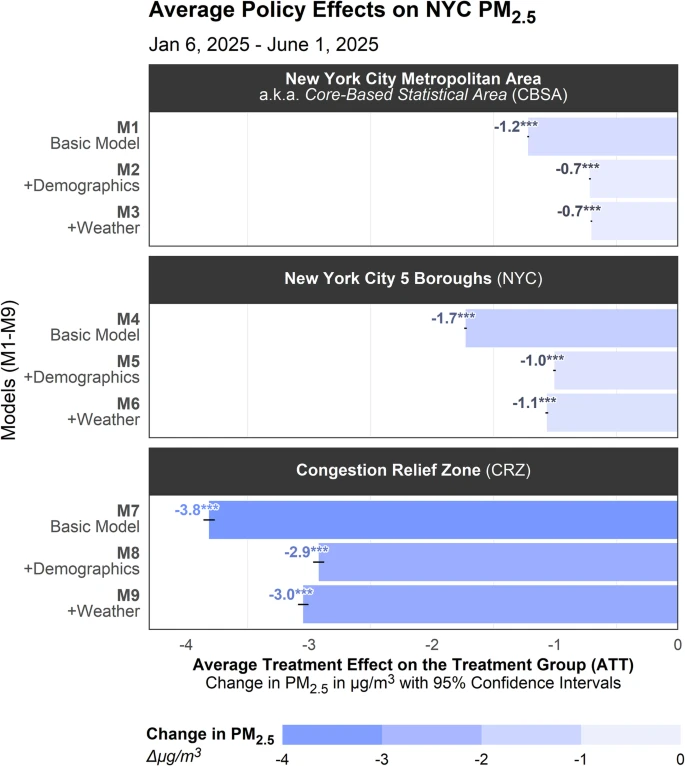
Cities around the world are facing more severe climate and air-quality challenges, and transportation remains one of the largest contributors to greenhouse gas emissions and urban pollution. Congestion pricing, already used in cities like London and Singapore, has been viewed as a promising strategy to reduce traffic, cut emissions and improve public health. New York City’s new congestion pricing program offers a uniquely large-scale test case, prompting researchers to analyze its short-term air-quality impacts using daily PM2.5 data from 42 monitoring stations over 546 days.
The study found that the policy led to substantial reductions in air pollution, especially within Manhattan’s Congestion Relief Zone, where daily PM2.5 levels dropped by about 22% compared to what would have occurred without the program. While the largest gains were in the tolled area, meaningful decreases also appeared across the five boroughs and even in surrounding regions, with improvements growing stronger over time. These results provide the first U.S.-based, zone-specific evidence that congestion pricing can quickly and broadly improve air quality, offering valuable insights for other cities considering similar approaches.