How to have right mindset to tackle infrastructure challenges
We are the hard hat department and drive the nail flush for Albuquerque. We are the ones who engineer, build and maintain the City’s infrastructure, in other words, anything that requires a hard hat. In most cities, we’re called Public Works, here we’re the Department of Municipal Development. Our name reflects a subtle but important distinction; the department is here to develop and improve the city, not just making sure it works.
I oversee 300 employees who are prepared every day to maintain roads, traffic signals, crosswalks and streetlights and to manage construction of new community centers, trails, public safety facilities and senior centers. The public counts on us to ensure that their streets are safe and well-lit and that critical facilities are built and renovated on time and on budget. Recently we’ve adopted the Silent First Responder logo as we are among the first to respond to emergencies to clear roadways and restore services.
I joined the Department in 2020 as an attorney and was promoted to Deputy Director and then Director two years ago. My priority on day one was delivering on projects that were “stuck.” As government professionals we all know funding, staffing, design or any number of issues that can slow down projects for matrixed organizations. The public can’t wait for red tape and my charge is to turn every challenge into an opportunity. I’ve learned how to succeed with every aspect of a project, from securing the funding to managing the ribbon cutting.
First, I bring in contractors early in design. They help define the possible and provide needed reality checks on time and budget. Second, forget “but this is the way we’ve always done this” and be open-minded. We revamped our procurement and project delivery methods and reorganized our management team so that we could move faster. Third, I attend site meetings with my project managers, the design team and the contractor to set expectations and understand the challenges.
Next, we use updated technology.We adopted electronic bidding, project management software, worked with contractors to use drones to track projects and we default to solar where possible. Then, we have the hard conversations. What are the roadblocks? Identify the problems as soon as they happen and come to the table with recommended solutions. Additionally, I push my team to get out of City Hall as much as possible. They get the most information from onsite visits and public outreach. We need to understand the problems the public is facing and what we are trying to solve.
Finally, I set expectations and deadlines internally and externally. My team has a list of priorities and deadlines and we discuss updates at every opportunity. Externally, I expect contractors and consultants to be firm with schedules or deliverables.
What these seven steps have taught me is that difficult circumstances led to unanticipated but better results. For example, for a high-priority pedestrian lighting project that would significantly improve safety on a HFIN corridor, we struggled with utility conflicts, funding and long lead-time items. We were stuck. So, we pivoted. We found that decorative solar lights were cheaper, faster and vandal proof. We are now using these lights as a model across the city.
In another situation, following contractor and traffic engineer input, we pivoted mid-design from constructing a complicated crossing at an intersection to a new, safer and attractive roundabout. We have since updated City standards to require roundabouts in lieu of new signalized intersections unless a compelling reason exists not to.My Department is here to develop the city, to effect real change and I push every division to think like change makers.
Recently, a young cyclist was tragically hit and killed by a car at a bicycle crossing. Along with the cyclist’s family, the City Council, the Administration and community support, the Department jumped into action. In a matter of months, we built a HAWK Signal at the crossing to improve safety. We added a speed camera. We changed a 50-year old law so this will, hopefully never happen again. We launched a “Stop for Everyone” educational campaign on the new changes. We also kicked off crossing improvements around the City.
No project should ever be left hanging. They just require the right mindset and team to hammer the nail flush.
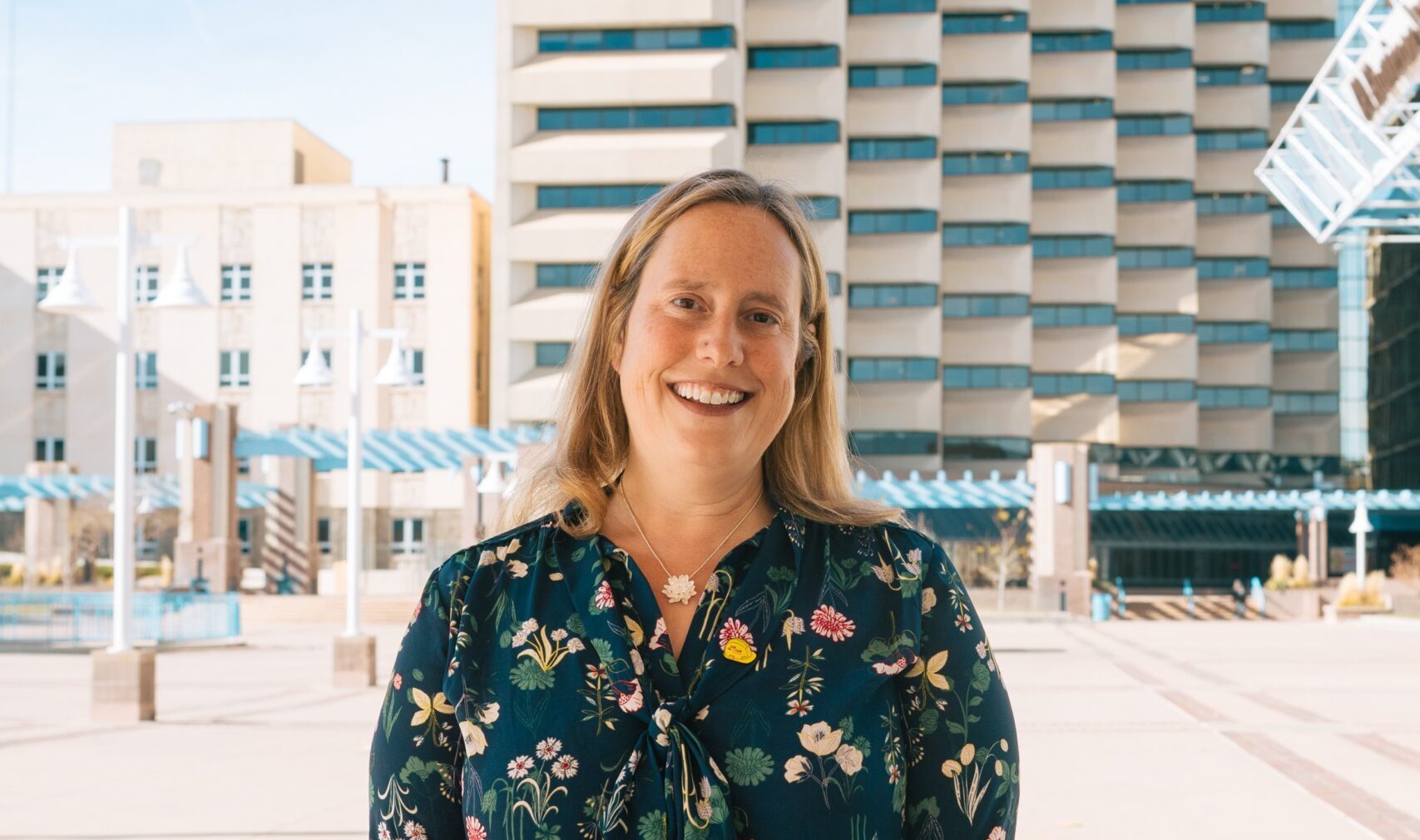
Jennifer is the Director of the Department of Municipal Development in Albuquerque, New Mexico. She can be reached at JenniferTurner@cabq.gov.
This column is featured in the March issue of American Infrastructure, read the print version.