Georgia Approves $73.65 Million for Municipal Water Infrastructure
The Georgia Environmental Finance Authority (GEFA) has approved approximately $73.65 million in financing for water and wastewater infrastructure projects across 19 Georgia communities. Announced on November 13, 2026, the funding will support improvements to drinking water distribution systems, wastewater treatment facilities, water storage infrastructure and municipal utility networks. The approved loans are intended to help local governments address infrastructure needs, maintain reliable utility services and advance planned capital improvement projects throughout the state.
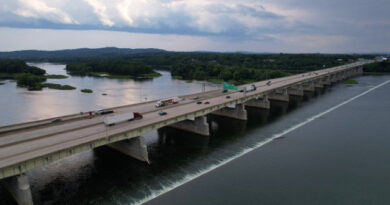
The largest allocation includes a $36.7 million Georgia Fund loan to the Bryan County Board of Commissioners for the installation of a new water main, booster pump station and well upgrades. The project will extend a water main along Interstate 16 and establish a connection with Effingham County, allowing Bryan County to receive treated surface water from Effingham County and the city of Savannah. The improvements are designed to reduce the county’s reliance on groundwater withdrawals and expand access to regional water supplies. The financing is structured as a 40-year, interest-free loan and forms part of Georgia’s broader investment in coastal surface water infrastructure.
Several communities received funding for wastewater treatment and collection system improvements. The city of Gordon was approved for a $7 million Clean Water State Revolving Fund loan to upgrade its wastewater treatment plant and rehabilitate lift stations. Riceboro received approximately $6.01 million for improvements to its wastewater treatment plant and pump stations, while St. Marys was awarded $2.75 million for lift station rehabilitation and water main replacement. These projects will support the maintenance and modernization of existing municipal wastewater infrastructure.
Additional financing will support drinking water distribution improvements, storage capacity and system upgrades. The city of Butler received $2 million for new water lines and construction of an elevated water storage tank, while Summerville was approved for $1.5 million to construct a water storage tank. Echols County received $2.5 million for water main replacement and installation of an automatic meter reading system. Other projects include a new water line in Oak Park and improvements to water control infrastructure in Cornelia.
A portion of the approved financing will also support lead service line inventories and replacements across multiple Georgia communities. Blakely received $3.5 million, Lumpkin was approved for $2.93 million and Baconton received approximately $1.39 million for projects involving the identification and replacement of potential lead and galvanized drinking water service lines. Similar financing was approved for Georgetown-Quitman County, Nicholls, Rockdale County, Savannah and Springfield. These investments will assist local utilities in evaluating existing distribution infrastructure and planning necessary replacements.
GEFA also approved financing for projects addressing emerging contaminants in wastewater systems. Adairsville received $101,000 for a sludge dewatering system and wastewater treatment facility improvements related to PFAS contamination in biosolids. The Newton County Water and Sewerage Authority was approved for $1.3 million to conduct pilot testing of advanced wastewater treatment technologies designed to remove emerging contaminants at its water pollution control plant.
The financing package includes loans through the Georgia Fund, Clean Water State Revolving Fund and Drinking Water State Revolving Fund. Several communities qualify for reduced interest rates or partial principal forgiveness based on project characteristics and affordability criteria. The approved financing establishes funding for individual municipal infrastructure projects, with construction and implementation proceeding according to each community’s project schedule. Collectively, the investments support Georgia’s continued efforts to maintain and modernize essential water and wastewater systems across the state.