What government contractors should expect in 2026
Americans experienced a rapidly changing world in 2025 and from all indications, it appears that change will continue to be the status quo in 2026. The procurement-related changes are noteworthy for companies that sell to all levels of government.
Government contracting rules and processes changed significantly at the federal level and changes are now rolling out at state and local jurisdictions in some states.
There’s no doubt that collaborative initiatives between private sector firms and government officials will continue to be abundant in 2026 because critical needs still exist, but recent procurement changes will have some impact. Go-to-Market strategies may need to be reworked and political mandates will be important to monitor. The jurisdictions currently representing the least amount of change will be found at the local levels of government. The same will be true if federal officials relinquish a large portion of project regulatory responsibility to the states.
In 2025, there was an abundance of infrastructure contracting and federal funding contributed greatly to those projects. But, by the end of the year, the funding support from federal coffers may transition from expansion to steadier, state-led initiatives.
Funding from the federal Infrastructure for Rebuilding America and Infrastructure with Sustainability and Equity programs supported hundreds of infrastructure efforts in 2025 along with the U.S. Department of Transportation (USDOT)’s Build America Bureau’s Transportation Infrastructure Finance and Innovation Act programs. All indications are that these programs will remain healthy in 2026. The U.S. Army Corps of Engineers Civil Works Program also provided funding support for infrastructure projects and that program is expected to flourish in 2026.
Resilience and sustainability projects will provide high demand for contracting expertise with funding from all levels of government. That’s because restoration efforts must escalate in order to mitigate recurring weather events, salvage aging public assets, enhance public safety and meet increasing citizen needs.
The USDOT will continue to have an abundant amount of funding, and, although most funding will flow through state DOTs, a large portion will go directly to regional and local government projects. Planning documents confirm that hundreds of large infrastructure projects are planned by local authorities for 2026. Also, many infrastructure-savvy individuals believe that federal funding support for large projects may require some amount of private sector investment in the future. If that happens, contractors should be very aware.
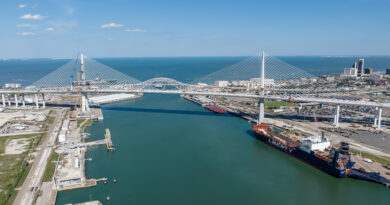
The projection for contracting opportunities with U.S. ports in 2026 is unusually strong. Expansions and modernizations are planned along with rail enhancements and new facility construction. The USDOT’s 2026 budget highlights a $550 million port infrastructure development program that will require private sector expertise. State funding will also be allocated for port modernizations because of the economic impact ports have on each state’s economy. Project needs will include marine construction, dredging, berth rehabs, on-dock rail work, facility expansions, gate/yard systems and electrification energy upgrades.
Wastewater infrastructure showed the strongest growth for funding in 2025 compared to other sectors and the water sector will be one of the hottest markets in 2026. The spending growth projections for water initiatives result from government investments that must be made to combat Per- and polyfluoroalkyl substances pollutants, wastewater-treatment plant upgrades and the removal of aging and corrupted water pipelines. The EPA’s Clean Water State Revolving Fund along with state and local governments will provide funding for investing in long-delayed plant expansions and system rehabilitation projects. The consequences of not addressing water needs are too dire to be ignored.
Almost every project launched in 2026 will lean heavily on new technology. Construction, engineering and professional service contractors should stay abreast of leading-edge technology. Power and grid projects will be highly visible because of weather-related events, sustainability requirements, new types of renewable energy options, much-needed transmission buildouts and utility construction. Other energy-related projects will include line/substation work, interconnection-related upgrades and network protection. Data Center projects are already straining grid resources throughout the country and power enhancement will be critical at the local levels of government for economic development.
There is no perfect way to compare contracting opportunities in 2025 to what can be expected in 2026. Recent and anticipated changes make accuracy impossible. But it appears obvious that there will at least be no reduction in the number of contracting opportunities available. 2026 should be a very good year for successful collaborations between public and private sector partners, especially for contractors that monitor changes that may continue to occur.
 By Mary Scott Nabers is President and CEO of Strategic Partnerships, Inc. She may be reached at mnabers@spartnerships.com
This is featured in our January issue of American Infrastructure, read the print version here.