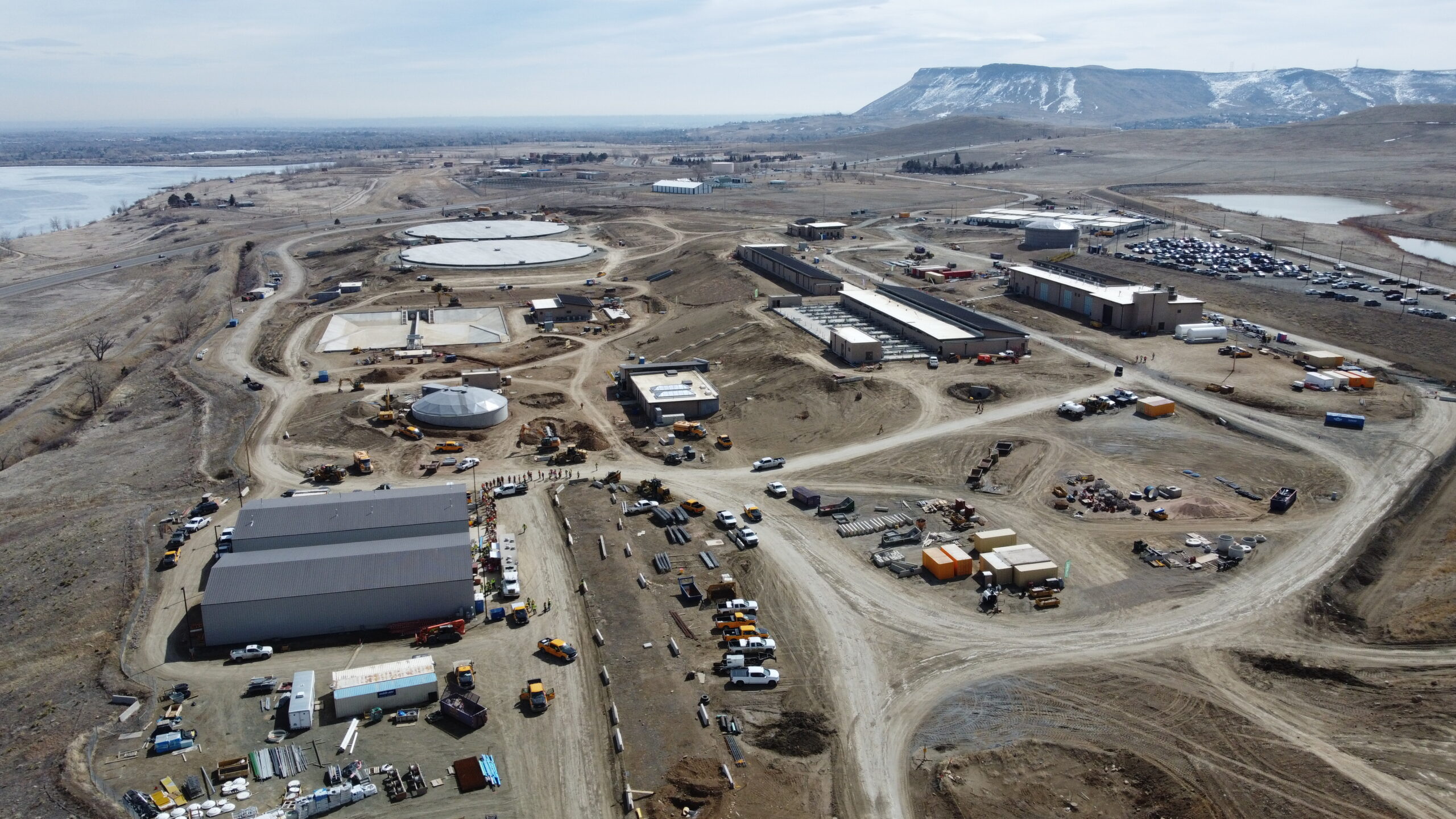
Addressing Aging Infrastructure with Sustainability
The completion of the Denver Water Northwater Treatment Plant in Golden, Colo., marks a significant milestone in their commitment to provide clean and safe drinking water to their community. With the Water Treatment Plant approaching 90 years old, the system needed an overhaul to replace the outdated infrastructure.
During the planning process, Denver Water established several forward-looking project goals related to safety, quality, budget, maintainability, sustainability, personnel and schedule.
The plant’s design was intended to prioritize efficiency and usability. The site was designed to support safe and efficient flow of traffic, while also allowing for future upgrades, expansions and improvements to both processes and structures. Ease of maintenance for all equipment was also considered in the design to support long-term operational efficiency while achieving the highest sustainability ratings in a cost-effective manner.
An Underground Surprise
The design and construction of the Northwater Treatment Plant was carried out through a highly integrated and collaborative process involving Denver Water, an Owner’s Representative team, the Construction Manager-at-Risk (CMAR) and multiple prime design consultants. To support this collaboration, Denver Water established a co-location facility where all key project team members worked side by side throughout the design phase.
During the design and construction phase the project presented unique geographical challenges. The plant is located between a major highway and foothills, limiting layout flexibility. However, the design team adjusted the design plan to leverage the area’s topography to optimize building placement and process flow.
What the team did not expect was the discovery of the Tindall Mine, an abandoned underground coal mine beneath the site. The mine’s location, depth and age raised concerns about potential ground subsidence. In response, geotechnical engineers conducted a high-level evaluation and based on their findings. Then the site layout shifted all major facilities outside the boundaries of the mine, ensuring long-term structural integrity and safety.
Sustainable Design
The Northwater Treatment Plant incorporates several innovative design features that set it apart as a forward-thinking and resilient facility. The filter process uses deeper filter beds, which allow for extended operation between cleanings. This design is particularly well-suited to treating water impacted by climate-related events such as wildfires and floods, enhancing the plant’s adaptability and reliability.
Another key highlight for the plant is the integration of ultraviolet technology for water disinfection. This advanced method reduces the need for chemicals, minimizes spatial requirements and shortens treatment time. \
The team looked to Denver Water’s Sustainability Guide and supported a wide range of environmental and operational goals. This included energy and water efficiency, responsible materials management, ecosystem stewardship and the development of high-quality infrastructure.“Sustainability was a central focus throughout both the design and construction phases of the project,” said Peter McCormick, Project Manager at Denver Water.
The project pursued and achieved two major sustainability certifications. This includes LEED Gold for the Operations Building and Envision v2 Gold for the overall project. The LEED certification was earned through offsetting energy use with onsite renewable energy. As well as incorporating durable and energy-efficient materials while designing a site that promotes open space and effective rainwater management.The Envision verification recognized the project’s contributions to public quality of life, long-term planning and resource efficiency.
Several innovative design strategies contributed to this project’s achievements. Buildings were partially or fully buried to leverage the insulating properties of soil, reducing the need for conditioning of building spaces. A hydroturbine was integrated into the Headworks building and raw water piping system, with infrastructure in place for a future second unit for onsite power generation. Additionally, space was reserved onsite for future solar and battery storage installations, allowing for continued progress toward energy independence.
Community Impact
The nearly $520-million project successfully opened for operations in 2024. Completed over the course of eight years it now treats up to 75 million gallons of water per day.
The community also responded positively to the project. Denver Water prioritized early and ongoing engagement with the community, involving them during the planning phase and maintaining transparent communication throughout construction. The design of the plant reflects a thoughtful approach to minimizing visual impact, most buildings are partially buried and exterior materials and colors were carefully selected to blend with the surrounding environment.
Photo Credit: Denver Water
By Sofia Feeney. She is the Editor of American Infrastructure and can be reached at sofia@builder.media
This is featured in our January issue of American Infrastructure, read the print version here.